
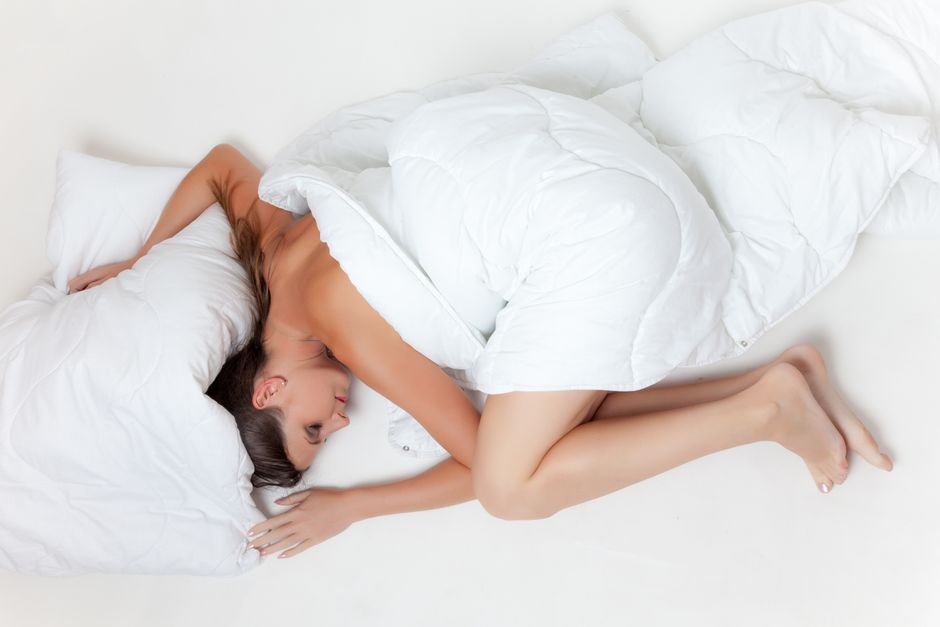
For years, I woke up feeling like my battery was only charged to 15%. Not just tired, but deeply, cellularly exhausted. And the brain fog? Some days I felt like I was wading through mud just to find a simple word.
Hormonal shifts in perimenopause can wreck your sleep with things like night sweats and anxiety. This constant disruption may interfere with autophagy—your body’s critical cellular cleanup process that happens while you rest. When that deep cleaning gets interrupted, the breakdown in the perimenopause autophagy sleep connection could be a key reason you feel so run down and foggy.
Why Is My Sleep Suddenly So Awful?
If you're waking up drenched at 3 a.m. or staring at the ceiling with a racing mind, you’re not imagining it. And you're definitely not alone. It’s biology. The endocrine changes during perimenopause are a central reason sleep can become so fragmented (Sleep Disturbances in Menopause, 2026). Your two main female hormones, estrogen and progesterone, are basically going off-script.
When estrogen fluctuates and drops, it can destabilize your brain’s internal thermostat. The result? Those lovely, sleep-shattering hot flashes (Perimenopause and Life Transitions, 2024), which products like GloBalance can help manage by supporting hormonal equilibrium. On top of that, progesterone, which has a natural calming effect, is also declining. This can contribute to a feeling of anxiety that makes it tough to unwind at night, a challenge that formulas like GloSerene are designed to address, or fall back asleep after waking (Perimenopause and Sleep: Why It Changes, 2026).
What Is This 'Perimenopause Autophagy Sleep' Link, Really?
Okay, let's talk about autophagy. It sounds complicated, but the idea is simple. Think of it as your body’s internal recycling and quality control program. At a cellular level, this process identifies and breaks down old, damaged, or dysfunctional parts—like misfolded proteins or worn-out mitochondria—to be recycled for energy or used as building blocks for new, healthy cell components (Blocking autophagy in blood vessels, 2026). It’s fundamental to keeping your cells running cleanly and efficiently.
Here’s the thing. Much of this essential housekeeping is thought to be most active during our deep, restorative stages of sleep. It's primetime for the body's repair crews to get to work. So, when perimenopause symptoms consistently chop your sleep into little pieces, it brings up a critical question. Is this constant interruption getting in the way of that cleanup? The whole conversation around the perimenopause autophagy sleep connection explores how hormonally-driven sleep issues might impact our long-term cellular health and contribute to feelings of accelerated aging.
So How Does Poor 'Perimenopause Autophagy Sleep' Make Me Feel Worn Out?
That profound exhaustion isn't just about being "tired." It's deeper than that. First, there's the obvious: chronic sleep disruption itself is well-known to worsen mood, increase fatigue, and just drag down your overall quality of life (Perimenopause and Sleep: Why It Changes, 2026). No mystery there. You don't get enough rest, you feel terrible.
But the potential autophagy link adds another layer. If our cells' ability to clear out debris and repair themselves is less efficient because of consistently poor perimenopause autophagy sleep cycles, it makes sense that we might feel it on a systemic level. It’s a theory, but a compelling one. When your cells aren't functioning optimally, it could contribute to that feeling of sluggishness, physical discomfort, and the brain fog that's so common during this time (Have you experienced new body aches, 2023).
What This Means for You
Seeing this connection isn't about adding another thing to worry about. Honestly? It’s about understanding. It helps reframe why you feel the way you do. It's not a personal failure or a lack of trying. It's a physiological chain reaction involving cellular cleanup hormones. Knowing this gives you a new target—protecting your sleep.
It shifts the focus from just "getting through it" to actively supporting your body's natural repair systems. Sleep isn't a luxury, especially now. It’s the foundation of your cellular health. So instead of fighting against the hormonal changes, the focus can become about creating the best possible conditions for your body to rest and run its essential maintenance programs, night after night.
Frequently Asked Questions
What is the direct link between perimenopause, autophagy, and sleep?
The link is currently theoretical but logical. Researchers know perimenopause disrupts sleep and that deep sleep is important for autophagy, your body's cellular cleanup process. Therefore, it's suggested that the poor sleep common in perimenopause could interfere with this vital cellular maintenance, but more human studies are needed.
Does lack of sleep during perimenopause really make you age faster?
The link between poor sleep accelerated aging is a real concern as chronic poor sleep gets in the way of the body's nightly repair work. This affects skin health, cognitive function, and cellular recovery. Since autophagy is key to that repair system, supporting sleep is crucial for long-term wellness.
Can I improve my body's autophagy by sleeping better during perimenopause?
You can't directly control autophagy, but you can support the conditions where it works best. Prioritizing consistent, quality sleep is one of the most powerful things you can do. By creating a better environment for rest, you're giving your body the time and opportunity to perform its essential cellular cleaning.
Sources
- Perimenopause and Sleep: Causes and Solutions to Disruptions (2026)
- Perimenopause and Sleep: Why It Changes and What Can Help (2026)
- Sleep Disturbances in Menopause: Neuroendocrine Mechanisms and Clinical Implications (2026)
- Nutritional interventions in treating menopause-related sleep ... (2024)
- Sleep Problems and Menopause: What Can I Do? | National Institute on Aging (2026)
- Sleep, Melatonin, and the Menopausal Transition - PMC - NIH (2017)
- Have you experienced new body aches and pains in perimenopause? (2023)
- Perimenopause and Life Transitions: The Complete Guide (2024)
- Blocking autophagy in blood vessels reduces skin inflammation in mice (2026)
This statement has not been evaluated by the Food and Drug Administration. This product is not intended to diagnose, treat, cure, or prevent any disease.