
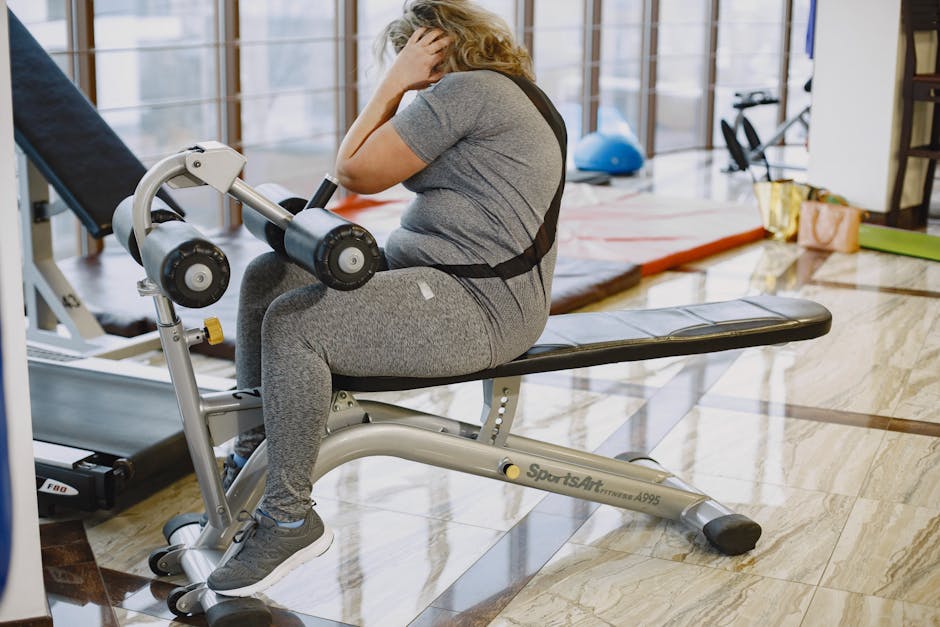
You’re doing the same workouts, lifting the same weights, showing up for yourself. But when you catch your reflection, something just feels… softer. Like you’re putting in all the effort for half the results.
If you're experiencing perimenopause muscle loss despite working out, it’s not in your head. It’s your hormones. Specifically, declining estrogen levels make it harder for your body to build and maintain lean muscle, a process known as protein synthesis. Your body’s rules have changed.
So, How Can Hormones Affect Muscle Tone?
For the longest time, I just figured I was getting older and losing my motivation. But it’s so much more than that. Our hormones, especially estrogen, are deeply involved in our body's wellness, and that includes the realities of hormonal changes and strength. Think of estrogen as a key supervisor on a construction site—it plays a big role in signaling your body to repair muscle fibers after you work out, which is how they grow stronger.
As we enter perimenopause, estrogen levels start to fluctuate and drop. That supervisor starts calling in sick. The whole muscle-repair process gets less efficient. Suddenly, the workout that used to build strength is now just barely enough to maintain it. This gradual loss of muscle mass even has a name: sarcopenia. While estrogen is the primary driver, the overall hormonal balance, including the relationship between progesterone and muscle mass, is also in flux. And research suggests sarcopenia can be accelerated during this transition. In fact, clinical studies have shown that the muscle in our arms and legs is measurably lower in women who are in late perimenopause compared to those in the early stages. It's a progressive shift that often begins years before our periods actually stop.
More on daily habits in the Journal.If My Usual Workout Isn’t Cutting It, What Will?
This is the part that can feel so frustrating. You're doing everything "right," but the results aren't there. But it’s not that your workout is broken—it’s that your body needs a different kind of support now. The old playbook just doesn’t work as well.
So, what does work? The two most important shifts are focusing on resistance training and seriously upping your protein. While all movement is good for you, resistance training—think weights, resistance bands, or even bodyweight exercises—is a scientifically supported way to counteract this muscle loss. It sends a powerful signal to your body to build and maintain that lean mass. It’s not about becoming a bodybuilder (unless you want to be!). It’s about telling your muscles you still need them.
The other half of the equation is fuel. Your body can’t build muscle out of thin air. It needs protein. And as our protein synthesis becomes less efficient, we need to give our bodies more of the raw materials to work with. Research suggests a daily protein intake of about 1.0 to 1.2 grams per kilogram of your body weight is a good target to aim for, especially when combined with that regular resistance training.
We look at why eating less stopped working after 40 separately.What This Means for You
First, please know this isn't a personal failure. Not at all. It's a biological shift that happens to so many of us, and managing it requires a holistic approach from workouts to overall hormonal support with options like GloBalance. Feeling weaker or softer despite your efforts isn't a sign you're not trying hard enough. It's a sign your body is changing, and your strategy needs to change with it.
You don't have to just accept it. The key is to start working with your body instead of fighting against it. This might look like swapping one of your cardio days for a session with weights. It might mean consciously adding a source of protein to every single meal and snack. These aren't drastic changes, but they are smart ones. They give your body the exact tools it's asking for right now to stay strong and feel capable.
Frequently Asked Questions
How quickly does muscle loss happen in perimenopause?
It's typically a gradual process, not something that happens overnight. Research shows a slow but steady annual decline of nearly 1% in leg lean mass in older women, and this process can begin during the menopausal transition.
Is cardio still important if I'm trying to prevent perimenopause muscle loss?
Yes, cardio is still fantastic for your heart health, mood, and overall wellness. The shift isn't about abandoning cardio, but rather ensuring that resistance training becomes a non-negotiable part of your routine to specifically target and support muscle maintenance.
Is it too late to build muscle if I'm already in my late 40s?
No. It is never too late to build strength. While it may be more challenging than it was in your 20s due to hormonal changes, your muscles can still respond to resistance training and adequate protein. The key is consistency.
Sources
- Effects of Perimenopause on Muscle Mass (N/A)
- The Importance of Nutrition in Menopause and Perimenopause—A Review (2024)
- Menopause and the Loss of Skeletal Muscle Mass in Women (2021)
- Resistance training alters body composition in middle-aged women... (2023)
- Muscle and bone mass in middle‐aged women: role of menopausal status and physical activity (2020)
- Perimenopause And Muscle Weakness: Understanding Hormonal Impact On... (N/A)
- Association between menopause-related symptoms and muscle mass index among perimenopausal and postmenopausal women... (2024)
These statements have not been evaluated by the Food and Drug Administration. This product is not intended to diagnose, treat, cure, or prevent any disease.