
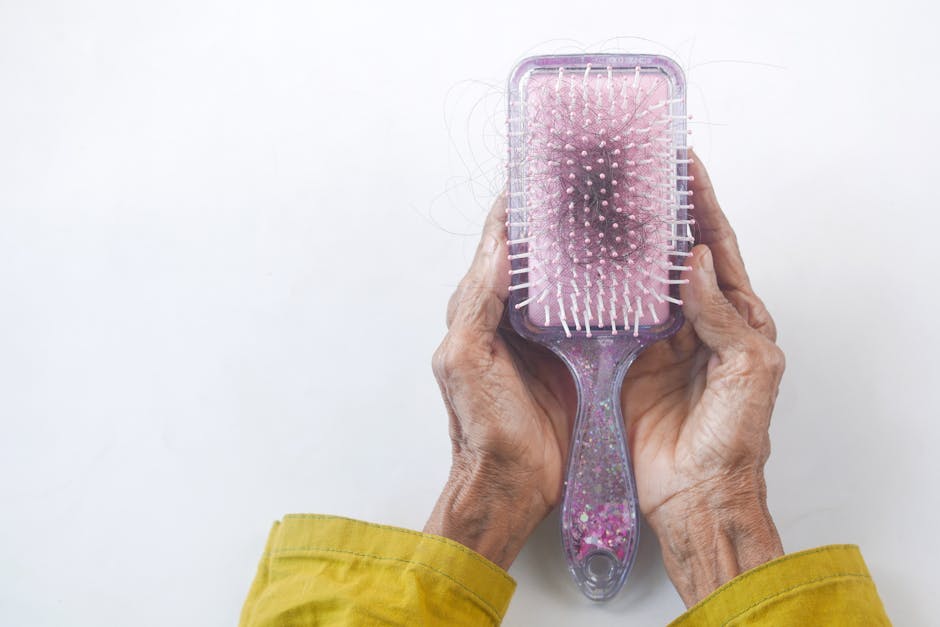
My ponytail used to be so thick I needed two hair ties. Then, somewhere around 42, it started to feel… flimsy. I wasn't just seeing more hair in the drain; I could feel the difference every single day.
If your part seems wider or your brush is fuller than usual, you’re not imagining it. Understanding perimenopause hair loss causes starts with your hormones. Specifically, as your estrogen levels decline, your hair's growth phase gets shorter, which can lead to increased shedding and a decrease in overall thickness and density.
How Exactly Do Hormones Change Your Hair?
For years, your hormones have been running a tight ship when it comes to your hair's growth cycle. Estrogen, in particular, helps keep your hair in its growth (anagen) phase for longer. It's a big part of why pregnancy hair can feel so thick and full. But during perimenopause, levels of a key estrogen called estradiol begin to fluctuate and drop. This change sends a signal to your hair follicles to shorten that growth phase. So, your hair sheds more quickly and doesn't have as much time to grow long and strong. It's a subtle but constant shift in the balance. It’s not just about shedding, either. The connection between estrogen and hair growth is clear, and these same hormonal changes can alter the actual structure of your hair, resulting in strands that are thinner and a noticeable decrease in hair density.
Is It Just Hormones, or Is Something Else Going On?
While hormones are the main driver of hormonal hair thinning in women, they rarely work alone. Think of it more like a perfect storm. Perimenopausal hair loss is almost always influenced by other factors that can make the situation feel more intense. Your genetics play a huge role — if your mother experienced thinning hair, you might be more predisposed. Chronic stress is another major contributor, and let's be honest, this life stage isn't exactly a walk in the park. There’s more on how years of stress add up here. And then there’s nutrition. Your hair follicles are tiny but mighty, and they need a steady supply of vitamins and minerals to do their job properly. The rest of our writing on daily habits is here. Any nutritional gaps can show up in the health of your hair. It’s complicated, and all of these factors can be happening at the same time.
What Does the Research Say About Nutritional Support?
So, what can you actually do about it? While you can't stop the hormonal transition, you can focus on giving your body the building blocks it needs for healthy hair. The science here is still emerging, but some studies offer encouraging insights. An older but still relevant study from 2015 showed that women who took a supplement with omega-3 and 6 fatty acids plus antioxidants for six months saw improvements in hair density and a reduction in the number of hairs in the shedding (telogen) phase. More recently, a 2023 trial looked at Pycnogenol®, a pine bark extract. It found that daily supplementation significantly increased hair density in postmenopausal women over a six-month period. It's important to know this study was done on a specific group of women—Chinese and postmenopausal—so we can't apply the results to everyone. Still, it points toward the role that targeted nutritional support may play in hair health during this transition.
What This Means for You
Seeing your hair change is frustrating. And a little unnerving. But the first thing to know is that this is an incredibly common part of the perimenopausal journey. You aren't alone in this. The most important first step is to talk to a doctor you trust. They can help you rule out other potential causes for hair shedding, like thyroid issues, anemia, or other deficiencies. Once you have a clearer picture, you can make informed decisions about your wellness—whether that involves diet changes, stress management, or targeted nutritional supplements. This isn't about finding a magic "fix," it's about supporting your body through a significant change with patience and good information.
Frequently Asked Questions
Is hair loss from perimenopause permanent?
It's more of a change than a permanent loss for many women. Because the follicles aren't typically damaged—just affected by hormones—you can support hair health through nutrition and lifestyle. The goal is often to minimize thinning and support the health of the hair you have.
Can I completely stop perimenopause hair shedding?
Probably not completely, because shedding is a natural part of the hair cycle. The goal is to bring the growth and shedding phases back into a healthier balance. When estrogen drops, the shedding phase can become more dominant, so the focus is on supporting the growth phase.
Why does my hair texture feel so different—like it's more dry and brittle?
Hormonal shifts, particularly lower estrogen, can affect more than just the growth cycle. They can also impact your scalp's sebum (natural oil) production and the structure of the hair shaft itself, leading to hair that feels drier, coarser, or more brittle than you're used to.
Sources
- The Menopausal Transition: Is the Hair Follicle “Going through Menopause”? (2023)
- Menopause, skin and common dermatoses. Part 1: hair disorders (2022)
- Menopause Hair Loss: Key Causes (2024)
- Effect of a nutritional supplement on hair loss in women (2015)
- Can Pycnogenol prevent hair loss in postmenopausal women? (2023)
- Hair Regrowth: How diet, lifestyle, and supplements may ... (2024)
- What causes women to lose hair during perimenopause and menopause? (n.d.)
- Menopause and hair loss in women: Exploring the hormonal transition (Pre-publication, 2025)
- Menopause and hair loss in women: Exploring the hormonal transition (Pre-publication, 2025)
This statement has not been evaluated by the Food and Drug Administration. This product is not intended to diagnose, treat, cure, or prevent any disease.