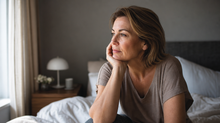
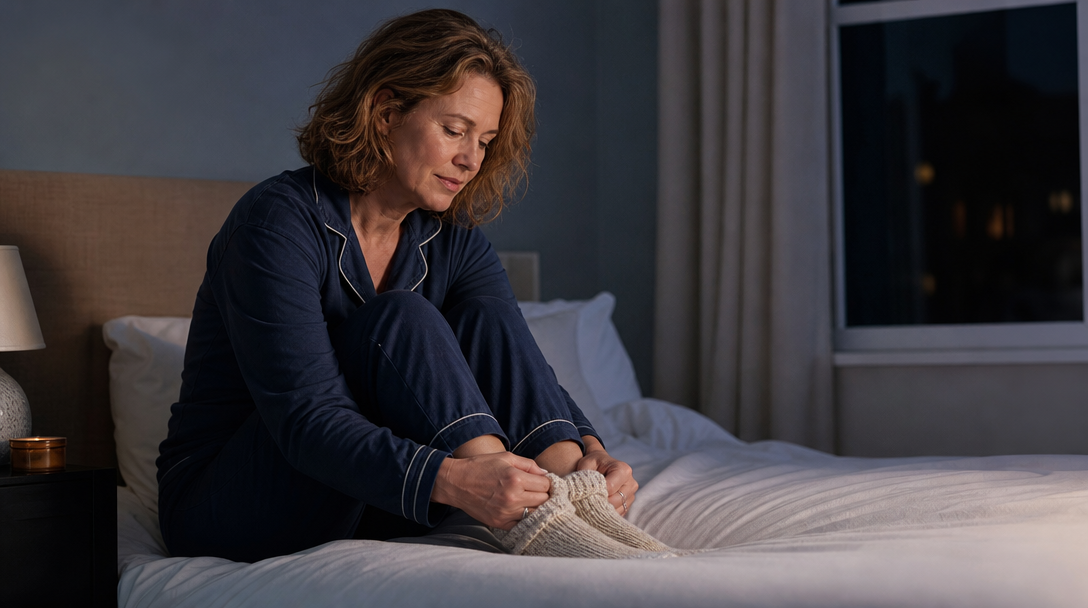
You’re finally in bed, ready for sleep. But under the warm duvet, there are two blocks of ice where your feet should be. Sound familiar?
If you're dealing with cold feet at night during perimenopause, you're not imagining it. Fluctuating estrogen can mess with your body’s internal thermostat and circulatory system, affecting blood flow to your hands and feet. This makes it incredibly hard for your body to cool down properly, which is a key signal for your brain to fall asleep.

How Do Hormones Make My Feet So Cold?
It all comes down to thermoregulation. Your body is constantly working to maintain the right temperature, and a big part of that is managing how your blood vessels expand and contract. Estrogen plays a role in this delicate dance. During perimenopause, when estrogen levels are all over the place, your body can get mixed signals. (Why do cold feet get worse during menopause? - SOXS.co EN, 2026)
This can lead to your blood vessels constricting when they shouldn’t, reducing blood flow to your extremities — like your feet. That’s why you can feel perfectly warm everywhere else, but your feet feel like they’ve been in a snowbank. This is why so many women experience cold feet at night during perimenopause, sometimes with a persistent feeling of cold or even numbness. (Menopause and your feet is a Thing! - Reid Podiatry, 2025) It’s one of the many strange and frustrating symptoms of this transition.
Can Anxiety Cause Cold Feet at Night During Perimenopause?
Yes, absolutely. If you’ve noticed more anxiety or stress since perimenopause started, that can also contribute to cold feet. When you’re anxious, your body kicks into its "fight or flight" stress response. It’s an ancient survival mechanism.

Here’s the thing: your body doesn’t know the difference between a real threat and the low-grade, simmering anxiety of a Tuesday afternoon. In response, it pulls blood away from your extremities (hands and feet) and directs it toward your vital organs and major muscle groups, getting you ready to run. (Does Perimenopause Cause Cold Feet? Unraveling the Connection and Finding Warmth - Menopause Mastery, 2025) The result? Ice-cold feet, right when you’re trying to wind down.
Why Do Cold Feet at Night During Perimenopause Ruin My Sleep?
This isn't just about comfort; it's about the deep biological link between thermoregulation and sleep. To initiate sleep, your core body temperature needs to drop slightly. Your body achieves this by sending heat from your core out to your skin, hands, and feet. It’s a process called vasodilation, where the blood vessels near the skin widen to release heat.
But if your feet are already freezing, this heat-dumping process can't happen efficiently. Your body is basically trying to send warmth to a part of you that’s too cold to receive it. This stalls the whole "time for sleep" signal, leaving you awake and frustrated, wrestling with cold feet and a body that refuses to switch off. (Cold Hands and Feet at Night Disrupting Sleep: Causes and Solutions, 2026) And honestly? That's exhausting, but targeted sleep support like GloRest can help create a more consistent wind-down routine.
What This Means for You
First, know that this is a real, physiological thing. You’re not broken. Your body is navigating a massive hormonal shift, and its systems are trying to adapt. For many, finding comprehensive support with a formula like GloBalance helps create a sense of stability during these changes.
It's important to talk to your doctor about this. While the connection between cold feet at night during perimenopause is strong, cold feet can also be a symptom of other conditions like hypothyroidism, issues with estrogen and circulation, or a B12 deficiency. Getting a proper check-up is always the right first step. For more insight into related sleep issues, you might find our article on how perimenopause disrupts your sleep architecture helpful.
In the meantime, simple things can make a huge difference. Think warm socks (cashmere or wool are amazing), a hot water bottle at the foot of the bed, or a warm foot bath before you climb in. The goal is to gently warm your feet to help your body’s natural sleep process along. You're not alone in this search for support, either. Surveys show around 80% of women in this stage of life have used dietary supplements to help manage their symptoms. (Effectiveness of Multisymptom Support for Better Relief and Alleviation of Common Effects in Perimenopause (EMBRACE PERIMENOPAUSE) - PMC, 2024) The key is finding what works for your body, especially when temperature regulation goes haywire, which we also explore in our guide on why blood sugar spikes can trigger night sweats.
Frequently Asked Questions
Can perimenopause cause cold feet even if I have hot flashes?
Yes, and it's one of the most confusing parts of perimenopause. Because your body's thermostat is malfunctioning due to hormone swings, it can overcorrect. You might swing from a hot flash to a "cold flash," which can leave your extremities, like your feet, feeling icy. (Are Premenopausal Cold Flashes a Thing?, 2025)
When should I see a doctor about cold feet in perimenopause?
You should consult your doctor if your cold feet are accompanied by changes in skin color, numbness, tingling, or pain. It's also wise to get checked if the symptom is new and persistent, to rule out other underlying conditions unrelated to perimenopause, such as circulatory or thyroid issues.
Are there any herbs that can help with temperature regulation?
Some women explore herbs like Black Cohosh for vasomotor symptoms like hot flashes and night sweats. (Office of Dietary Supplements - Black Cohosh, 2024) However, the National Institute on Aging states it's currently unknown if these are consistently helpful or safe, so discussing them with your healthcare provider is essential. (Hot Flashes: What Can I Do? - National Institute on Aging - NIH, 2026)
Sources
- Why do cold feet get worse during menopause? (2026)
- Does Perimenopause Cause Cold Feet? Unraveling the Connection and Finding Warmth (2025)
- Menopause and your feet is a Thing! (2025)
- Cold Hands and Feet at Night Disrupting Sleep: Causes and Solutions (2026)
- Effectiveness of Multisymptom Support for Better Relief and Alleviation of Common Effects in Perimenopause (EMBRACE PERIMENOPAUSE) (2024)
- Are Premenopausal Cold Flashes a Thing? (2025)
- Office of Dietary Supplements - Black Cohosh (2024)
- Hot Flashes: What Can I Do? (2026)
This statement has not been evaluated by the Food and Drug Administration. This product is not intended to diagnose, treat, cure, or prevent any disease.