
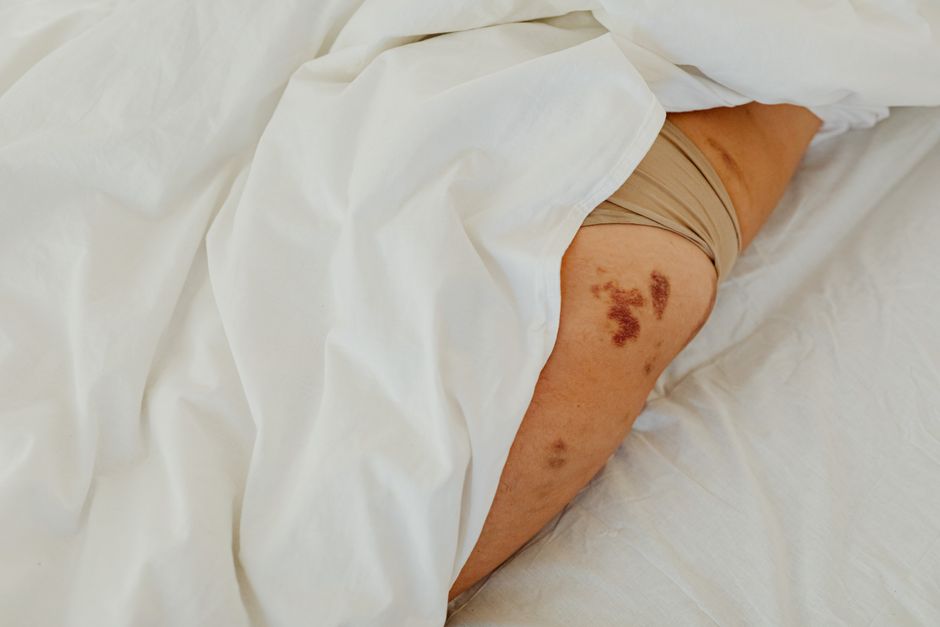
It started with my bra. One day, the underwire just felt... wrong. Not tight, but sore, like I had a bruise. Then it was the seam on my jeans, and a casual arm squeeze from a friend that made me flinch. I thought I was just being sensitive.
If this sounds familiar, you’re not just being sensitive. The likely reason for this sudden tenderness is fluctuating estrogen. This hormonal shift can thin your skin and reduce its natural cushioning, making the nerve endings just beneath the surface more reactive. That's why even a light touch can sometimes register as pain, leading to what many women describe as perimenopause painful skin.
So, Why Are Hormones Making My Skin So Sensitive?
For years, estrogen has been one of your skin’s best friends. It plays a huge role in producing collagen, which keeps skin plump and firm, and helps maintain your skin’s protective moisture barrier.(Skin, hair and beyond, 2022) Think of it as the invisible scaffolding that keeps everything strong and resilient. But as you enter perimenopause, that scaffolding starts to get a little shaky. The decline in estrogen is directly linked to a drop in collagen, hydration, and overall skin health.(Beyond Hot Flashes, N/A)
As that natural padding thins out and the moisture barrier weakens, your nerve endings are left more exposed. They’re closer to the surface, with less of a buffer between them and the outside world. So that gentle pressure from your waistband or the texture of a wool sweater? This connection between fluctuating estrogen and nerve pain is why your nerves might now interpret that normal sensation as an alarm signal. It’s not in your head. It’s a very real physiological response to a significant hormonal shift.(Menopause and Common Dermatoses, 2025)
Is Perimenopause Painful Skin Different From Other Sensations like Itching?
Yes, though they all stem from the same root cause—hormonal changes affecting your skin and nervous system. You may have heard of other strange perimenopausal skin issues, like sudden bouts of itchiness (pruritus) or that bizarre feeling of insects crawling on your skin (formication), sometimes described as sudden 'electric shock' sensations.(Why Your Skin Feels Like..., N/A) They’re all part of the same family of symptoms, but perimenopause painful skin is its own unique, frustrating thing.
This heightened sensitivity to touch—where a non-painful stimulus feels painful—is a specific type of nerve response known as hormonal allodynia. It's not an allergic reaction, and it doesn't mean there's anything wrong with the spot that hurts. It’s just your nervous system being hyper-vigilant. So while one woman might be driven mad by itching, you might be struggling with skin that feels tender and bruised for no apparent reason. It’s just another sign of the complex changes happening inside your body.(Menopause, skin and common dermatoses, 2023)
What Can Support My Body with Perimenopause Painful Skin?
This is where we have to be honest—there's no magic bullet. But you’re not helpless, either. Supporting your body from the inside out is a good place to start. Research suggests that a well-rounded approach focusing on diet and key nutrients can be beneficial for skin wellness during the menopausal transition.(Skin care during the menopause period, 2014) This means focusing on anti-inflammatory foods that can help with symptoms like morning stiffness, staying incredibly well-hydrated, and ensuring you're getting enough vitamins and minerals.
On top of that, some women explore botanical supplements as part of their wellness strategy, and formulas like GloBalance are designed with this transition in mind. For instance, one clinical study found that supplementation with the botanical extract Pycnogenol® helped improve a range of menopausal symptoms.(Supplementation with Pycnogenol®, 2011) While this doesn't directly point to fixing painful skin, it does show that certain ingredients are being researched for their potential to support a woman’s body through the overall transition.(Botanical and Dietary Supplements for Menopausal Symptoms, 2005)
What This Means for You
First, know that you’re not alone and you're not imagining things. This experience of perimenopause painful skin is a real, documented symptom of perimenopause. Understanding the "why" behind it can be a huge relief all by itself. It’s not some mystery illness; it’s a biological process.
This is a time to be kinder to your body. Maybe that means swapping out your lacy bras for soft, wireless ones. Or choosing cotton and silk fabrics over anything scratchy. It might mean telling your partner that a gentle back rub is better than a deep squeeze right now. It's about listening to what your body is telling you and making small, gentle adjustments. You’ve got this.
Frequently Asked Questions
Why does my skin hurt when lightly touched during perimenopause?
This happens because declining estrogen can thin your skin and weaken its protective barrier. This leaves nerve endings more exposed and reactive, causing them to interpret light, normal touch as a painful sensation. It’s a common symptom of the hormonal shifts during this time.
Can hormones really cause perimenopause painful skin?
Yes, absolutely. Hormonal fluctuations, especially the drop in estrogen, directly impact skin structure—including collagen levels and hydration. This change is a key reason many women experience new sensitivities, including skin that feels painful, bruised, or tender to the touch for no obvious reason.
Will this painful skin feeling in perimenopause ever go away?
For many women, this sensitivity lessens as their hormones stabilize in post-menopause. However, every woman's experience is unique. Focusing on supporting skin health through nutrition, hydration, and gentle lifestyle adjustments can help your body better manage these symptoms throughout the transition.
Sources
- Effectiveness of Multisymptom Support for Better Relief and Alleviation of Common Effects in Perimenopause (EMBRACE PERIMENOPAUSE) (2025)
- Supplementation with Pycnogenol® improves signs and symptoms of menopausal transition (2011)
- Why Your Skin Feels Like... — The Menopause Health Coach (N/A)
- 7 Daily Rituals for Managing Perimenopause Symptoms (N/A)
- Breast Pain and Tenderness in Perimenopause: Why It... | Peritale (N/A)
- Botanical and Dietary Supplements for Menopausal Symptoms (2005)
- Skin care during the menopause period: noninvasive procedures of beauty studies (2014)
- Menopause, skin and common dermatoses. Part 2 (2023)
- Beyond Hot Flashes: Understanding and Treating Menopause-Associated Skin Changes | Journal of Integrative Dermatology (N/A)
- Menopause and Common Dermatoses: A Systematic Review | American Journal of Clinical Dermatology (2025)
- Full article: Skin, hair and beyond: the impact of menopause (2022)
This statement has not been evaluated by the Food and Drug Administration. This product is not intended to diagnose, treat, cure, or prevent any disease.