
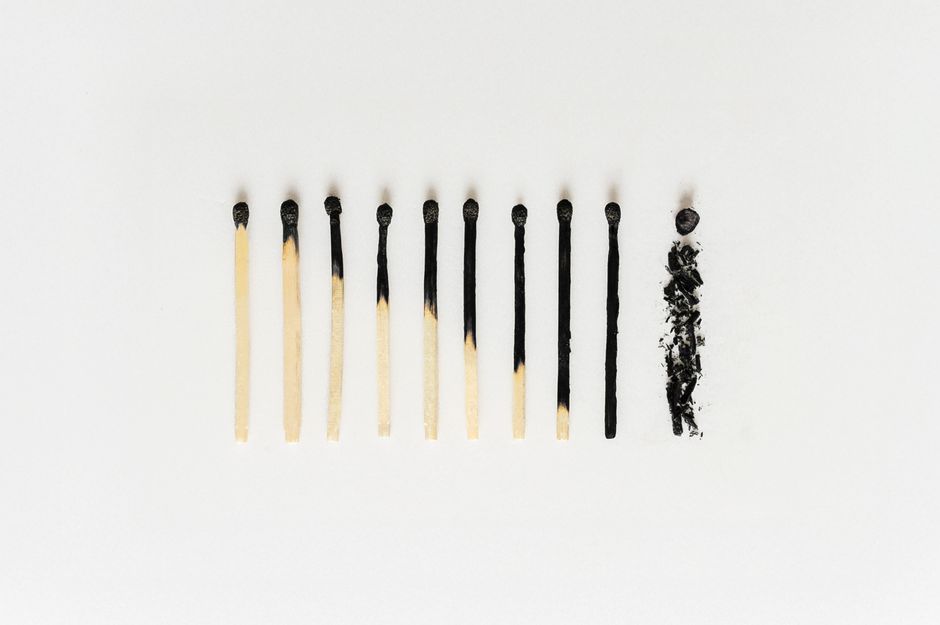
Do you ever feel like your ability to handle stress just… left? One day you were juggling everything, and the next, even a minor inconvenience sends you into a tailspin. I’ve been there.
When you’re under constant pressure, your body can prioritize making the stress hormone cortisol over other essential hormones. Because it uses the same precursor, this process might divert resources away from producing progesterone, our naturally calming hormone. It's one theory for why chronic stress depletes progesterone, making you feel wired and anxious.
What is the 'Pregnenolone Steal' and How Does it Work?
Let's make this simple. Think of a molecule in your body called pregnenolone as the “mother” hormone. It’s the starting point for a whole family of other hormones, including both cortisol (for stress response) and progesterone (for calm and sleep).(HealthCentral, Unknown) In a balanced system, your body makes enough of everything it needs from this single source.
But chronic stress changes the game. Your body thinks it’s in constant danger, so it sounds the alarm for more and more cortisol. The 'pregnenolone steal' is a theory that explains how your body might respond to this demand.(Oova Life, 2025) It suggests that the system diverts pregnenolone toward the cortisol production line, leaving less available to make progesterone. It’s a survival mechanism, but one that can leave you feeling the effects of lower progesterone.
So, How Does Stress Deplete Progesterone and Make You Feel Anxious?
This is where it all connects to that awful on-edge feeling. This cortisol and progesterone relationship is key. Progesterone’s job isn’t just about our cycles; it’s a major player in our mood. Our bodies convert it into something called allopregnanolone, a neurosteroid that helps calm the brain by interacting with our GABA-A receptors.(NeuroLaunch, 2024) Think of it as your body’s built-in anti-anxiety signal.
So, when your progesterone levels are already naturally declining in perimenopause, any further dip can really be felt. When chronic stress depletes progesterone, your supply of that soothing allopregnanolone can also drop.(NeuroLaunch, 2024) That can lead to that “wired but tired” feeling, the low-grade hum of anxiety, irritability, and nights spent staring at the ceiling. Beyond mood, some research also suggests progesterone has a protective role in our overall cellular health.(PLOS One, 2021)
Is It Just That Stress Depletes Progesterone, or Is It More Complicated?
Here’s the thing, it might be a bit of a chicken-and-egg situation. While the 'pregnenolone steal' pathway suggests that high cortisol from stress can lower progesterone, some experts wonder if it works the other way, too.(Inner Balance, Unknown) Could it be that the natural hormonal shifts of perimenopause — including lower progesterone and estrogen — actually make our bodies less resilient to stress to begin with?
So instead of stress being the primary cause, it might be that our bodies just can’t buffer its effects as well as they used to. Either way, the result is the same when stress depletes progesterone: you feel overwhelmed and less like yourself. It's likely a feedback loop where stress and hormonal changes are both making each other worse.
What This Means for You
Knowing this isn't about adding one more thing to your worry list. It’s the opposite. It’s about understanding that what you’re feeling is chemical, not a personal failing. You haven't lost your ability to cope; your internal chemistry has just changed.
This knowledge can be a starting point. It's a reminder to be gentle with yourself and to look at stress not as something to "power through," but as a real, physical factor in your well-being. It's about finding small, sustainable ways to signal safety to your body, whether that’s a five-minute walk, deep breathing, or just saying no to one extra thing on your to-do list.
Frequently Asked Questions
Is the 'pregnenolone steal' a proven medical diagnosis?
No, it's not a formal medical diagnosis. It’s a theoretical model, mostly used in functional medicine, to explain how chronic stress might impact hormone production. It helps illustrate how the body can prioritize cortisol over other hormones like progesterone when under constant pressure.(Oova Life, 2025)
Can I tell if stress is the main reason my progesterone is low?
It's very difficult to isolate stress as the single cause. Progesterone naturally declines during perimenopause, which is the primary driver of lower levels in your 40s. Chronic stress is seen as a potential contributing factor that can worsen the situation, not the sole cause of the decline.(Inner Balance, Unknown)
Does feeling anxious mean my progesterone is definitely low?
Not necessarily, though it can be a contributing factor. Anxiety is complex and can be caused by many things. However, because progesterone helps produce the calming neurosteroid allopregnanolone, a significant drop in progesterone can reduce your brain's natural calming signals and may contribute to feelings of anxiety.(NeuroLaunch, 2024)
Sources
- Th1/Th2 balance: the hypothesis, its limitations, and implications for health and disease. (2003)
- Effects of lipoic Acid on acrylamide induced testicular damage. (2014)
- Stress and Perimenopause: How It Affects Your Hormones (2025)
- Cortisol and Progesterone: The Hormonal Balance and Stress Connection (2024)
- Cortisol and Perimenopause: How Your Hormones Impact Stress - Inner Balance (Unknown)
- Low Progesterone Symptoms in Women (Unknown)
- Progesterone depletion results in Lamin B1 loss and... | PLOS One (2021)
- Peer Reviewed Study Out: Testing... - Students for Life of America (2026)
"This statement has not been evaluated by the Food and Drug Administration. This product is not intended to diagnose, treat, cure, or prevent any disease"