
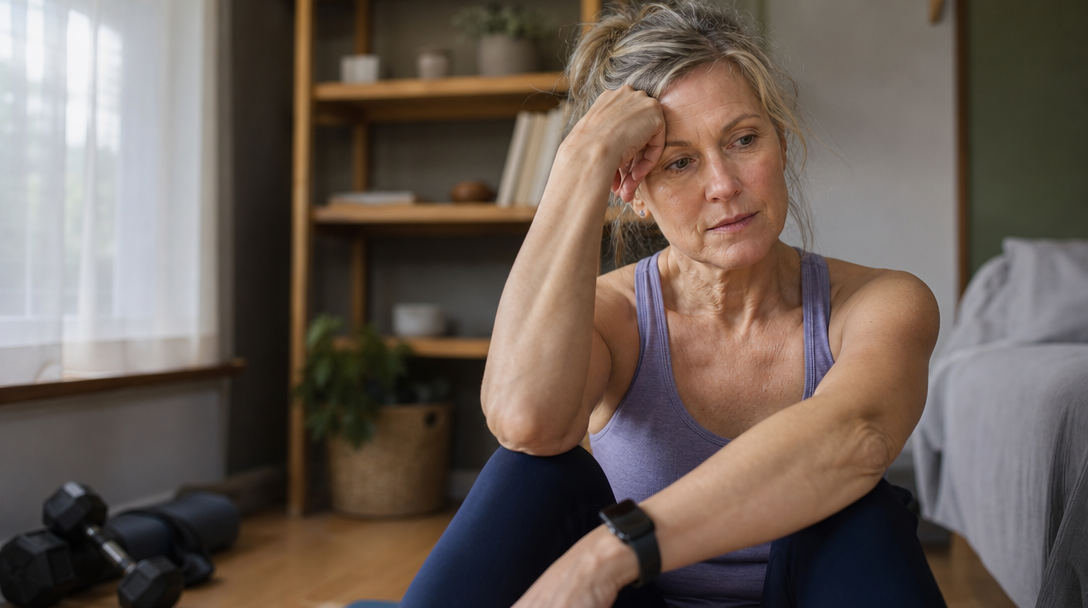
I used to finish a workout and feel like I could take on the world. Now, some days I finish a workout and feel like I need to take a three-hour nap.
If your workouts suddenly feel draining, you’re not imagining it. During perimenopause, fluctuating estrogen directly impacts how your muscles use energy and repair themselves. This can lead to that feeling of deep exhaustion after exercise, a common experience known as perimenopause exercise fatigue, turning what used to be a boost into a total energy drain.

So, Why Is Perimenopause Exercise Fatigue So Intense?
It all comes down to hormones, specifically estrogen. You might think of estrogen as just being about your cycle, but it plays a huge role in your whole body—including your muscles. While estrogen is a major player, it's also worth understanding how declining testosterone affects perimenopausal energy and motivation. It helps regulate your energy metabolism, which is the process of your cells turning fuel into usable energy. This disruption, sometimes linked to what's known as mitochondrial dysfunction menopause, means your cellular powerhouses become less efficient. As estrogen levels start to decline and fluctuate wildly during perimenopause, this entire process can get thrown off kilter.
Your muscles just don’t have the same access to energy they once did, and the process of repairing the tiny tears that happen during exercise is also impaired (Impact of Exercise on Perimenopausal Syndrome, 2025). This experience is often described as exercise intolerance perimenopause, where your body's capacity to handle physical stress is noticeably reduced. So you’re working with a less efficient energy system and a slower repair crew. No wonder you feel wiped out. It’s a real, biological shift, not a lack of willpower.
Is This Why My Muscles Are So Sore All the Time?
Yes, that’s a huge part of it. That next-day (or two-day) soreness you’re feeling is likely more intense than it used to be. The scientific term for it is myalgia, but I just call it feeling like I’ve been hit by a truck after a moderate yoga class. Because estrogen is involved in managing inflammation and supporting muscle repair, lower levels mean recovery takes longer and feels harder (Impact of Exercise on Perimenopausal Syndrome, 2025).

On top of that, if you're not sleeping well—and who is, especially if you feel exhausted even after a full night's sleep?—your body has even less time to do its repair work. It becomes a cycle: you're tired, so you push through a workout, which makes you more sore and fatigued, which disrupts your sleep, and on and on. This is a common experience of perimenopause exercise fatigue, and it can be incredibly frustrating.
What Kind of Movement Actually Helps with Perimenopause Exercise Fatigue?
The old "go hard or go home" advice? You can officially let that go. Pushing yourself to the brink is probably not going to serve you right now. Instead, the focus needs to shift from intensity to consistency and from punishment to support. Research actually shows that a habit of regular, moderate exercise is one of the best tools for managing a whole host of perimenopause symptoms, from hot flushes to mood changes and, yes, even fatigue (Impact of Exercise on Perimenopausal Syndrome, 2025).
In fact, one recent meta-analysis found that mind-body exercises are particularly effective. Things like yoga, Pilates, and tai chi were shown to significantly improve feelings of fatigue, sleep quality, and anxiety in perimenopausal women (Effects of mind-body exercise on perimenopausal and postmenopausal women, 2024). It’s not about giving up—it’s about getting smarter and listening to what your body is asking for. Because of that, a gentle approach might give you more energy than a grueling one.
What This Means for You
First, be kind to yourself. Your body is navigating a massive hormonal shift, and it’s doing the best it can. The exhaustion is real, and it’s not your fault. Trying to stick to the same workout routine you had in your 30s might be what’s causing the burnout.
This is a time for adaptation. Maybe that means swapping a high-intensity interval session for a long walk or a strength training class. Maybe it's doing Pilates instead of bootcamp. The goal is to move your body in a way that leaves you feeling good, not depleted. Research backs this up, suggesting that combining appropriate physical exercise with supportive nutrition and supplementation, such as The Complete Day & Night System, is a smart strategy for managing the symptoms of this transition (Physical Exercise and Dietary Supplementation in Middle-Aged Women, 2023). It’s about working with your body, not against it.
Frequently Asked Questions
Why do I feel more tired after exercise in perimenopause?
You feel more tired because fluctuating estrogen levels disrupt your muscle's ability to produce energy and repair itself efficiently. This hormonal change makes recovery slower and workouts feel more draining, which is the core reason for perimenopause exercise fatigue. It's a biological shift, not a personal failing.
Does strength training make perimenopause fatigue worse?
It can if the intensity is too high for what your body can currently handle. While strength training is vital for bone health, you might need to adjust. Try using lighter weights, focusing on perfect form, or adding an extra rest day between sessions to avoid deep fatigue.
What are the best exercises to fight fatigue during perimenopause?
Consistency is more important than intensity. Mind-body exercises like yoga and Pilates are particularly effective for improving fatigue and sleep (Effects of mind-body exercise on perimenopausal and postmenopausal women, 2024). Walking and moderate strength training are also excellent choices for supporting your wellness without causing exhaustion.
Sources
- Impact of Exercise on Perimenopausal Syndrome: A Systematic Review of Randomized Controlled Trials (2025)
- Effects of mind-body exercise on perimenopausal and postmenopausal women: a systematic review and meta-analysis (2024)
- Using a short questionnaire of the perimenopausal fatigue scale to evaluate perimenopausal women prone to fatigue syndrome (2021)
- Physical Exercise and Dietary Supplementation in Middle-Aged Women: A Narrative Review (2023)
- Dietary and Exercise Interventions for Perimenopausal Women: A Systematic Scoping Review (2022)
This statement has not been evaluated by the Food and Drug Administration. This product is not intended to diagnose, treat, cure, or prevent any disease.