
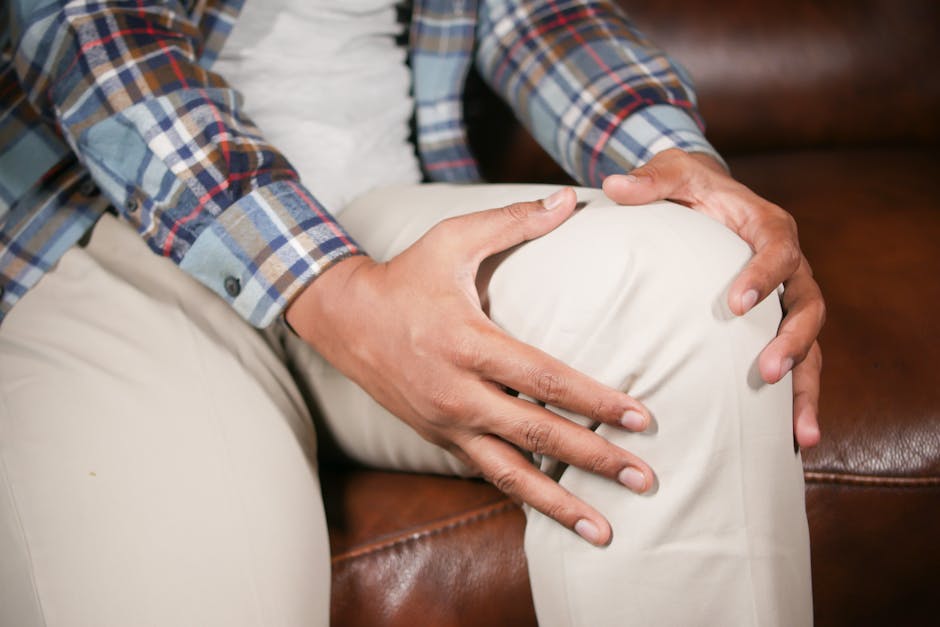
Some mornings I’d wake up and feel like I was 80 years old. My knees would crack, my shoulders would ache, and just getting out of bed felt like a real project. I wrote it off as bad sleep or just… getting older. But it wasn’t.
If you're suddenly feeling stiff and achy in your 40s, you're not imagining things. Fluctuating and declining estrogen during perimenopause is directly linked to joint pain. Estrogen helps manage inflammation and supports the collagen in your joint cartilage, so when it dips, you can feel it in your knees, hips, and hands.
So this is really about my hormones?
Yes. And for years, nobody really talked about it. So many of us just assume these new aches are the price of admission for being over 40. But musculoskeletal pain is one of the most common—and most underdiagnosed—symptoms of the menopausal transition. Your doctor might not even connect the dots unless you bring it up, because the symptoms can so easily be mistaken for normal aging.
Here’s the thing: estrogen isn’t just about periods. It plays a huge role in keeping your joint tissues healthy. It helps regulate fluid levels within your joints and has anti-inflammatory properties that keep things running smoothly. As your estrogen levels start to go on a rollercoaster during perimenopause, that protective effect weakens. The result? More inflammation, more hormonal joint stiffness, and that feeling that your body has betrayed you overnight.
A recent 2024 review confirmed just how closely estrogen levels are tied to knee pain, specifically, because of its role in maintaining cartilage and modulating the relationship between estrogen and inflammation right inside the joint. It’s not in your head. It’s in your hormones.
How exactly does estrogen decline lead to achy joints?
It's a two-pronged issue: less cushion and more fire. Think of estrogen as a key supporter of your body’s collagen production. Collagen is the springy, structural protein that makes up your skin, but it’s also the primary building block of your cartilage, ligaments, and tendons—the very stuff that cushions your joints. When estrogen declines, your body’s ability to produce collagen can slow down, leaving your joints with less natural padding and shock absorption.
At the same time, this hormonal shift can trigger a wave of systemic inflammation. It's that full-body ache you feel even when you haven't been to the gym. Suddenly, your immune system is a little more reactive, and your joints can bear the brunt of it. This isn't just a theory. A large, landmark study from the Women's Health Initiative found that postmenopausal women using estrogen-alone therapy reported a significant and lasting reduction in joint pain compared to women taking a placebo. It showed a direct link between estrogen and joint comfort.
What can I do about it?
Knowing the why is the first step. It validates what you're feeling and gives you a starting point. While hormone therapy is a conversation to have with your doctor, there are other ways to support your body through this change. Your wellness toolkit for joint health should absolutely include movement. I know, it's the last thing you want to do when you're stiff, but gentle strength training and mobility work are non-negotiable for building muscle to support your joints. There’s more on a short at-home strength routine here.
Researchers are also looking closely at how certain plant-based compounds might help. For example, a pilot study is currently investigating if Equol, a compound your body can make from soy isoflavones, can help with hand osteoarthritis in perimenopausal women because of its estrogen-like activity. This points to the growing interest in how nutrition and specific plant-derived ingredients can play a supportive role in hormone health and its related symptoms, including those creaky joints.
What This Means for You
First, give yourself some grace. Your body is going through a massive hormonal shift, and it’s okay to not feel like yourself. The aches and pains are real, and they are tied to what’s happening with your estrogen.
The most important thing you can do is start paying attention and connecting the dots. Don't just dismiss that new shoulder ache or stiff knee as something you have to live with. Track it. Talk to your doctor about it in the context of perimenopause. When you can walk in and say, "I know there's a link between perimenopause, estrogen, and joint pain," you change the entire conversation. You're no longer just a woman with unexplained aches; you're an informed advocate for your own health. And that's where the power is.
Frequently Asked Questions
Does perimenopause joint pain feel different from regular arthritis?
It can, yes. Many women describe perimenopausal joint pain as a more widespread, migratory ache—your shoulder might hurt one week, your wrists the next. It’s often accompanied by stiffness, especially in the morning, that tends to ease as you move. While it can overlap with osteoarthritis, it's often linked to that feeling of systemic, low-grade inflammation.
Can losing estrogen actually cause osteoarthritis in my knees?
The language doctors use is that declining estrogen is a significant contributing factor. It doesn't necessarily "cause" it on its own, but it can unmask or accelerate underlying wear-and-tear. Estrogen helps protect cartilage, so when your levels drop, your knees may become more vulnerable to the changes that lead to osteoarthritis.
If my estrogen is low, will my joints hurt forever?
Not necessarily. For many women, the worst of the joint pain happens during the perimenopausal transition when hormones are fluctuating wildly. Once you're post-menopausal and your body adjusts to its new normal, the symptoms can often stabilize or improve. Plus, focusing on supportive lifestyle changes like anti-inflammatory foods, strength training, and stress management can make a huge difference. Worth reading next: what to eat in the evening for better sleep.
Sources
- E-MHK-0103 (Mineraxin™): A Novel Nutraceutical with Biological Properties in Menopausal Conditions. (2017)
- Effects of Equol on Hand Osteoarthritis in Perimenopausal Women: A Pilot Study. (2025)
- Efficacy of Labisia pumila and Eurycoma longifolia standardised extracts on hot flushes, quality of life, hormone and lipid profile of peri-menopausal and menopausal women: a randomised, placebo-controlled study. (2020)
- Why Does Menopause Cause Joint Pain? The Estrogen... - Doctronic (N/A)
- my.clevelandclinic.org/health/diseases/21837-postmenopause (N/A)
- The Perimenopause Symptom Nobody Warns You... - Genesis Gold (N/A)
- Musculoskeletal Manifestations of Perimenopause: A Systematic Review ... (N/A)
- Estrogen Alone and Joint Symptoms in the Women's Health Initiative ... (2013)
- Musculoskeletal Pain during the Menopausal Transition: A Systematic ... (2020)
- The Mechanism by Which Estrogen Level Affects Knee Osteoarthritis Pain in Perimenopause and Non-Pharmacological Measures - PMC (2024)
- Menopause Joint Pain: Why It Happens, How to Treat It (2024)
"This statement has not been evaluated by the Food and Drug Administration. This product is not intended to diagnose, treat, cure, or prevent any disease"