
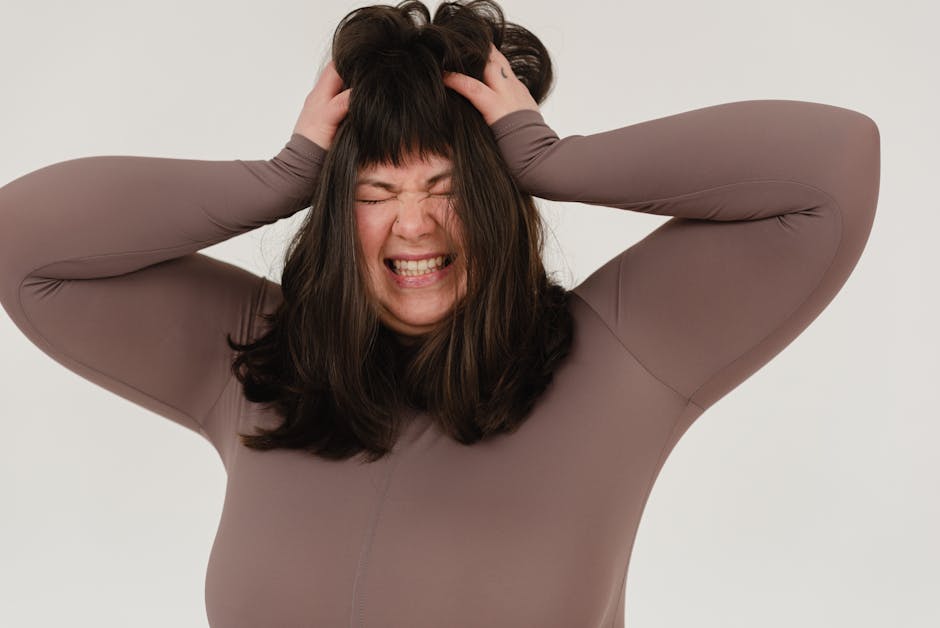
Some days, the sound of my husband breathing felt like a personal attack. The next day, I couldn't have cared less if the house burned down. If that emotional whiplash sounds familiar, you're not alone, and you're not going crazy.
This isn't just about being "moody." It’s about learning to read your body's signals. This guide is here to help you understand the difference in perimenopause irritability vs apathy, so you can figure out if your mood swings feel more like rage-fueled irritability or a flat, empty apathy — and what kind of support might actually help you feel like yourself again.
For years, I just thought I was failing. Failing at being patient, failing at being happy, failing at being… me. My moods felt like a rollercoaster I couldn't get off. On the "up" swings, everything was irritating. I was snappy, anxious, and felt like a tightly coiled spring ready to break. On the "down" swings, there was just... nothing. A gray, colorless landscape where joy and motivation used to live. It was exhausting.
What I wish someone had told me sooner is that this isn't a character flaw. It’s biology. The hormonal chaos of perimenopause — especially the fluctuating estrogen — directly impacts our brain chemistry. More like this in the Glomend Journal. Our brains can become more sensitive to stress, and research suggests these changes can even increase how we process and store fear-based stimuli. So no, you’re not imagining it. There's a real reason you feel so on edge.
But the type of mood change you’re experiencing can tell you a lot about what your nervous system needs. Is it overstimulated or is it completely depleted?
The Irritable, Snappy Mood: An Overstimulated System
This is the mood that feels hot, fast, and prickly. It's the perimenopause rage that boils up when someone cuts you off in traffic or the intense irritation when you can't find your keys. It's your nervous system stuck in high gear. Sound familiar?
- You feel constantly tense, anxious, or on edge.
- Small annoyances feel like major catastrophes.
- You're easily overwhelmed by noise, questions, or a long to-do list.
- Your patience has evaporated. You have zero buffer.
This state is often driven by a system that’s working too hard to keep up. And it’s made so much worse by the physical symptoms of perimenopause. Waking up in a pool of sweat for the third time in a night doesn't exactly pave the way for a calm, zen-like morning. In fact, studies show a strong link between vasomotor symptoms (like hot flashes and night sweats) and a spike in negative moods like tension and irritability. When you're sleep-deprived and physically uncomfortable, of course you're going to be irritable. It’s your body screaming that it’s overloaded.
Interestingly, one study of mildly depressed perimenopausal women found that increased irritability was linked to less variability in estradiol levels, whereas depressive symptoms were linked to more variability. The science is still emerging, but it shows that these mood states can have different hormonal patterns behind them.
The Flat, Apathetic Mood: An Under-Resourced System
Then there's the other side of the coin. The quiet, heavy, disconnected feeling. It’s not always outright sadness — it’s more like the color has been drained from your world. You know you should enjoy things, but you just… can't. This is what researchers call anhedonia, the inability to feel pleasure, and it’s a known psychological symptom of perimenopause.
This often feels like:
- A total lack of motivation, even for things you used to love.
- Experiencing emotional flatness perimenopause can leave you feeling numb or detached from your life.
- A sense of "what's the point?" about work, hobbies, or socializing.
- Deep, profound exhaustion that sleep doesn't seem to touch.
This is your nervous system running on empty. It’s so depleted from the hormonal shifts, the poor sleep, and the constant low-grade stress that it has gone into energy-conservation mode. It doesn't have the resources to generate feelings of joy, excitement, or engagement. It’s just trying to get through the day. And honestly? That's a lonely and frightening place to be.
What to Look For in Mood Support
When you're looking for supplements to support mood and nervous system regulation during perimenopause, you want formulas grounded in science, not hype. The high prevalence of sleep disturbances and irritability has led researchers to investigate the role of specific nutraceuticals. Clinical studies have explored compounds like resveratrol, tryptophan, and glycine for their potential supportive roles during this transition. Look for products with transparent labels that tell you exactly what’s inside and at what dosage — no "proprietary blends" that hide the facts.
What to Avoid
Steer clear of brands that make grand promises or use fear to sell their products. If a supplement claims it can "fix" your hormones or "cure" your anxiety, that's a major red flag. Your body isn't broken; it's transitioning. Also, be wary of products loaded with unnecessary fillers, artificial colors, or sugar. You're trying to calm your system, not add more stressors to its plate. Read the entire label, not just the marketing copy on the front of the bottle.
Our Pick: GloSerene
When you're dealing with a nervous system that’s either on high alert or completely offline, finding a sense of calm equilibrium is the goal. We developed GloSerene with this specific challenge in mind. It isn't about jolting your system or numbing it out; it’s about providing steady, gentle support.
The formula includes ingredients that are well-regarded for their role in supporting wellness and a sense of calm. It’s designed for the woman who feels that she’s running on fumes and whose stress response is dialed way too high. It’s for the woman who just wants to feel a sense of peace again—to feel like herself.
This approach focuses on providing support for an overtaxed system, which can be a more helpful way to feel like yourself again. It’s about building resilience from the inside so you can handle the inevitable stressors of life with a little more grace and a lot less reactivity.
Ready to Choose?
Your path is unique. Explore our formulas to see which one aligns with your wellness goals and can support you through this transition.
→ GloSerene for mood and stress support.
→ GloRest for sleep and relaxation support.
→ GloBalance for overall hormonal health support.
Frequently Asked Questions
Is it possible to feel both irritable and apathetic?
Absolutely. Many women experience both, sometimes even in the same day. Think of it as a sign that your nervous system is swinging wildly between being overstimulated and completely exhausted, trying to find a balance it just can't locate right now.
How do I know if my irritability is from perimenopause or just normal stress?
Perimenopause irritability often feels different—it's less predictable and can feel disproportionate to the trigger. If you find yourself flying into a rage over something small and later thinking, "Where did that come from?" that's often a clue that hormonal shifts are playing a big role in your stress sensitivity.
Can apathy during perimenopause feel like depression?
Yes, the symptoms can overlap, which is why it's so important to talk to a healthcare provider. There’s more on a five-minute journaling habit for mood swings here. Apathy or anhedonia (the inability to feel pleasure) is a hallmark symptom of depression, but it can also be a standalone symptom of perimenopausal hormonal changes. A professional can help you understand what you're experiencing.
Sources
- Perimenopause and First-Onset Mood Disorders: A Closer Look (2021)
- Why perimenopause affects your mood | Ohio State Health & Discovery (2025)
- Mood Changes During Perimenopause Are Real. Here’s What to Know. (n.d.)
- Resveratrol, tryptophanum, glycine and vitamin E: a nutraceutical approach to sleep disturbance and irritability in peri- and post-menopause (2015)
- Severe mental illness and the perimenopause (2024)
- Psychologic Distress and Natural Menopause: A Multiethnic Community Study (2001)
- Predictors of irritability symptoms in mildly depressed perimenopausal women (2021)
- Botanical and Dietary Supplements for Menopausal Symptoms (n.d.)
- Botanical and dietary supplements for mood and anxiety in menopausal women (n.d.)
This statement has not been evaluated by the Food and Drug Administration. This product is not intended to diagnose, treat, cure, or prevent any disease.