
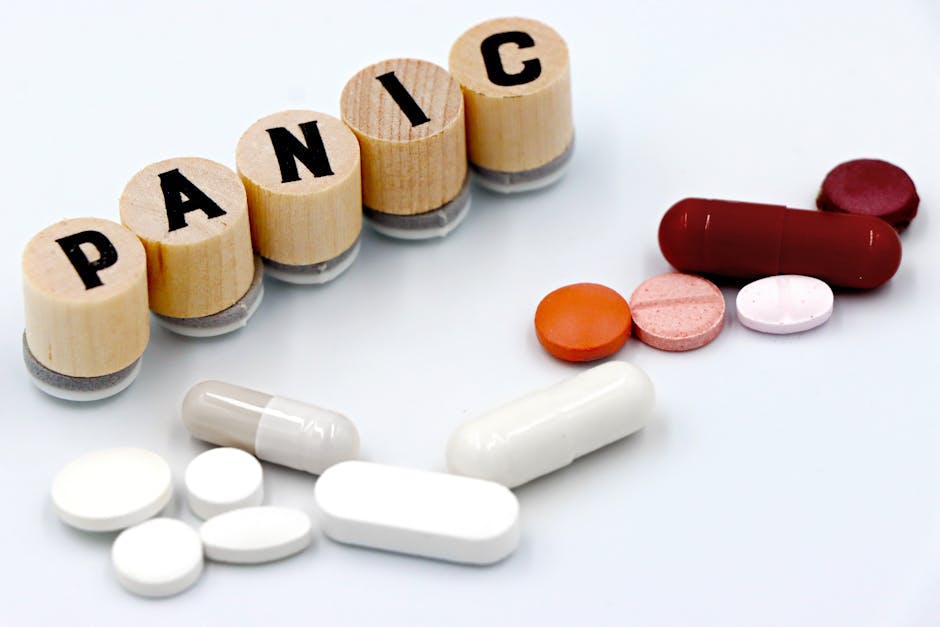
You’re just loading the dishwasher or sitting in traffic, and then—bam. A wave of dread washes over you. Your heart is racing, your palms are sweaty, and you feel a sense of impending doom for absolutely no reason at all.
If you're in your 40s, this sudden, overwhelming anxiety isn't just in your head. It's often a direct physiological response to the hormonal shifts of perimenopause. Fluctuating progesterone and cortisol levels can disrupt your brain's natural calming systems, leaving you feeling on edge and overwhelmed without an obvious trigger.
Is This Feeling Even Real?
Yes. It’s very real. That feeling of anxiety that seems to appear out of thin air is a recognized part of the perimenopausal experience. For years, women were told it was just stress or that they were being emotional. But we know better now. This isn't just a bad mood; it's a biological event. Significant hormonal shifts during this time can directly trigger or worsen mental health challenges, and that includes new or more intense anxiety.
In fact, researchers have a clinical term for the whole constellation of symptoms we go through: the 'climacteric syndrome'. And guess what's a core component? Heightened anxiety. It's not a personal failing. It's a well-documented physical response to a major life transition. One study from 2019 confirmed that psychosomatic symptoms, which include feeling anxious and overwhelmed, often change and can get much more intense as you move through perimenopause. So no, you are not making this up.
So, What Exactly Is Happening in My Body?
Okay, let’s get into the mechanics of it—without the medical jargon. Think of your hormones as a complex orchestra. For decades, they’ve played in relative harmony. Now, during perimenopause, some of the key musicians are starting to improvise or just walk off stage.
One of the first to go is progesterone. You can think of progesterone as your body’s natural calming agent. It has a soothing effect, a bit like a warm blanket. One of the leading theories is that progesterone helps support the GABA system in your brain. The rest of our writing on hormones and your body is here. GABA is a neurotransmitter that basically tells your brain to slow down, to chill out. It’s the brakes. But as progesterone levels become erratic and decline, you lose some of that natural calming influence. This loss of the natural progesterone calming effect means the brakes aren't as reliable anymore.
At the same time, your stress hormone, cortisol, might be fluctuating more wildly. So you have less of the "calm" hormone and potentially more of the "stress" hormone. These fluctuations in cortisol and mood swings are often linked, creating a perfect storm for feeling wired, on-edge, and completely overwhelmed, often when you least expect it. Your body is physically in a more pronounced state of alert, even when your mind knows there's no logical reason for it.
What This Means for You
First and foremost, give yourself some grace. You’re not broken, and you’re not losing your mind. Your body is navigating a massive biological shift, and this anxiety is a physical symptom of that change, just like hot flashes or irregular periods. More on why you swing between hot and cold. Just knowing the why can be incredibly validating. It’s not a character flaw; it’s chemistry.
This doesn't mean you have to just white-knuckle your way through it. Understanding the biological connection is the first step. The second is realizing you can support your body through this. And thankfully, you don’t have to do it alone. Research is pointing toward ways we can help our bodies find better balance during this time. For example, a major 2023 review of scientific literature found that certain nutritional interventions may help reduce the severity of anxiety symptoms for women in the menopausal transition. It starts with understanding what’s going on, and then gently giving your body what it needs.
Frequently Asked Questions
Can perimenopause cause anxiety to feel worse at night?
Yes, absolutely. Cortisol, the stress hormone, naturally dips at night to allow you to sleep. But during perimenopause, cortisol regulation can be disrupted, leading to spikes at night that can jolt you awake with a racing heart and a sense of panic.
Why does my perimenopause anxiety feel like it has no trigger?
Because the trigger is often internal and hormonal, not external. Your body is reacting to fluctuating levels of progesterone and cortisol, which puts your nervous system on high alert. So while you're just living your life, your internal chemistry is creating a fight-or-flight response for no apparent reason.
Is it possible to feel anxious during perimenopause even if I've never had anxiety before?
Yes, it's very common. Many women who never considered themselves "anxious people" suddenly experience significant anxiety or even panic attacks for the first time during perimenopause. It's a direct result of the new hormonal environment in your body and brain.
Sources
- Menopause and Mental Health - PMC (2024)
- Psychosomatic and vasomotor symptom changes during transition to menopause (2019)
- Clinical Evaluation of Effectiveness and Safety of Combined Use of Dietary Supplements Amberen(®) and Smart B(®) in Women with Climacteric Syndrome in Perimenopause (2024)
- Effects of nutritional interventions on the severity of depressive and anxiety symptoms of women in the menopausal transition and menopause: a systematic review, meta-analysis, and meta-regression (2023)
- Feeling Anxious for No Reason? This Is for You - Psych Central (2022)
- Why Do I Feel Anxious For No Reason? - Simply Psychology (2023)
- Perimenopause Anxiety: Symptoms, Diagnosis, and Treatment (2023)
- Feeling Overwhelmed: Symptoms, Causes, and Coping (2025)
- The Importance of Nutrition in Menopause and Perimenopause—A ... (2024)
- Botanical and dietary supplements for mood and anxiety in menopausal women (2007)
This statement has not been evaluated by the Food and Drug Administration. This product is not intended to diagnose, treat, cure, or prevent any disease.