
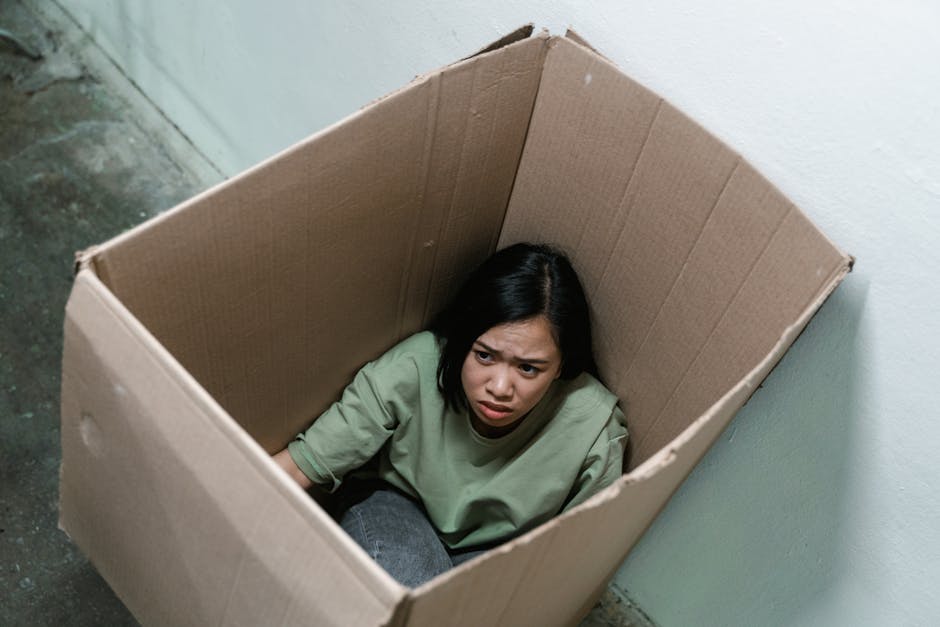
It happens out of nowhere, doesn't it? You’re in a meeting, in the grocery store, and suddenly your heart is just... going. Thumping against your ribs for no good reason, sending that jolt of panic straight to your brain.
If you're tired of feeling ambushed by your own body, I get it. This is a simple, practical guide to a technique called box breathing for anxiety. It’s not magic, but it is a powerful, science-backed way to interrupt that physical anxiety spiral and help you find your footing again, right in the moment.
How Do I Use Box Breathing for a Perimenopause Racing Heart? A Step-by-Step Guide
The first time someone told me to “just take a deep breath” when I felt that perimenopausal anxiety kick in, I wanted to throw something. It felt so dismissive. But box breathing is different. It’s structured. It gives your spinning mind a simple job to do—count to four. This rhythm acts as a cognitive anchor, pulling your focus away from the panic and onto the breath.
And there's real science here. This is one of many calming breathing techniques, and the evidence is strong: deliberate, slow breathing has been shown to help calm the sympathetic nervous system—your body’s gas pedal, or “fight or flight” response. Instead, it helps engage the parasympathetic nervous system, which is the brake. One study found that even digital versions of box breathing were effective in helping to decrease heart rate. It’s a way to send a physical message to your brain that says, "We are safe. You can stand down."
- Just Stop & Sit. You don't need a special pillow or a quiet room. Be wherever you are—in your parked car, at your desk, on the edge of the bed. If you can, sit up straight to give your lungs room, and gently close your eyes or soften your gaze.
- Exhale Everything. Before you start, push all the air out of your lungs. A big, slow whoosh out through your mouth. Get completely empty. This is like hitting the reset button before you begin.
- Breathe IN Through Your Nose (4 seconds). Close your mouth and inhale slowly and quietly through your nose to a steady count of four. Try to feel the air fill your belly, not just your chest. One... two... three... four. This is the first side of your box.
- HOLD at the Top (4 seconds). This is the most important part. At the top of the breath, just pause. Hold the air in your lungs for a count of four. Don't clamp down or strain. Just hold. One... two... three... four. This pause interrupts the shallow, panicked breathing cycle.
- Breathe OUT Through Your Mouth (4 seconds). Now, exhale slowly through your mouth for a count of four. Imagine you’re gently blowing out a candle. Control the release. Feel your shoulders drop. One... two... three... four.
- HOLD at the Bottom (4 seconds). Once all the air is out, pause again. Hold here, empty, for a final count of four. One... two... three... four. This completes the box. Then, start again with the next inhale. Repeat the entire cycle 4-5 times, or for as long as it takes to feel a shift.
Tips to Make This Work Long-Term
This isn't a one-and-done fix. It's a skill. And like any skill, it gets easier and more effective with practice. Try doing a few rounds of box breathing in the morning before you get out of bed, or at night to wind down. Practicing when you're already calm builds the muscle memory, so when a wave of anxiety hits, your body already knows the drill.
And please, a word of honesty. This is a fantastic tool for managing the in-the-moment physical symptoms of anxiety. It is not a substitute for proper medical care. If you are having frequent heart palpitations, chest pain, or anxiety that's disrupting your life, it is so important to talk to a doctor you trust. The rest of our writing on daily habits is here. They can make sure nothing else is going on and discuss a comprehensive plan with you, which can include lifestyle changes, therapy, and targeted nutritional support like GloBalance for overall hormonal harmony. Think of this as one really good tool in your wellness toolbox—not the entire toolbox itself.
Frequently Asked Questions
Why does perimenopause anxiety feel so sudden and physical?
Fluctuating estrogen and progesterone can mess with your neurotransmitters and your adrenal system—the system that controls your stress response, and one we aim to support with adaptogen-based formulas like GloSerene. More on mood and brain fog in the Journal. This can make your "fight or flight" response much more sensitive, triggering physical symptoms like a racing heart or dizziness even without an obvious emotional trigger.
Can box breathing for anxiety make my racing heart stop immediately?
It's more about gently guiding it down than flipping a switch. The goal is to interrupt the feedback loop where a racing heart causes panic, which makes your heart race faster. Controlled breathing can help lower physiological markers of stress like respiratory rate and blood pressure, but the effect is gradual, not always instant.
I tried it, but holding my breath made me feel more panicked. Am I doing it wrong?
You're not doing it wrong at all—this is really common at first. If holding for four seconds feels like too much, shorten the count. Try a 3-3-3-3 box, or even 2-2-2-2. The exact number doesn't matter as much as the steady, even rhythm. The goal is comfort, not strain.
Sources
- Box breathing relaxation technique: how to calm feelings... (N/A)
- 5 Natural Ways to Calm Racing Thoughts | Amen Clinics (N/A)
- Perimenopause Anxiety | Signs & Solutions | Nature’s Best (N/A)
- Evaluation of two easy-to-implement digital breathing interventions in the ... (2026)
- The Effects of Slow Breathing during Inter-Set Recovery on Power ... (2024)
- Sports Performance and Breathing Rate: What Is the Connection? A ... (2023)
- Breathing Practices for Stress and Anxiety Reduction: Conceptual Framework of Implementation Guidelines Based on a Systematic Review of the Published Literature (2023)
- A Systematic Review of Breathing Exercise Interventions: An Integrative Complementary Approach for Anxiety and Stress in Adult Populations (2025)
- Effectiveness of diaphragmatic breathing for reducing... : JBI Evidence Synthesis (2019)
This statement has not been evaluated by the Food and Drug Administration. This product is not intended to diagnose, treat, cure, or prevent any disease.