
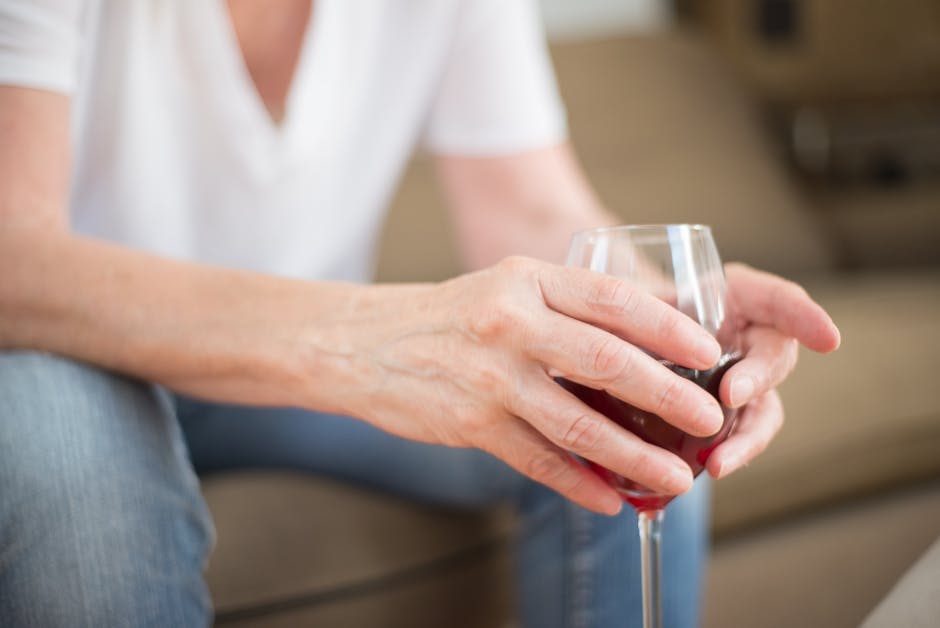
I used to love that ritual. A glass of Pinot Noir to mark the end of a long week. Now, that same glass feels like a gamble, and it almost always means a night of tossing and turning, followed by a day of racing thoughts.
If this sounds familiar, it’s not in your head. Many women experience perimenopause alcohol intolerance as shifting hormones—especially declining estrogen—are thought to slow down your body's ability to process alcohol. This means one drink can hit you harder, disrupting your sleep cycle, spiking stress hormones, and leaving you with that awful next-day anxiety.
So What Exactly Is Happening to My Body?
It's so easy to think you've somehow lost your edge or just can't "hang" anymore. But this isn't about willpower. It's about biology. Your body is navigating a massive hormonal shift, and that changes the rules for a lot of things, including how you process a glass of wine.
The connection between hormones and alcohol metabolism seems to be centered in your liver. Research suggests that as estrogen levels fluctuate and decline during perimenopause, it may affect how efficiently your liver produces the primary enzyme responsible for breaking down alcohol, called alcohol dehydrogenase (ADH). When there’s less of this enzyme on duty, alcohol isn't cleared from your system as quickly. It lingers, so its effects feel much stronger and last way longer than they used to.
Why Does It Wreck My Sleep and Spike My Anxiety?
That first sleepy feeling after a drink is deceptive. It feels relaxing, but it’s actually setting you up for a rough night. Even a single drink can mess with your sleep architecture, suppressing the deep, restorative REM sleep you need in the first half of the night. You’re getting sleep, but it isn’t the good stuff.
Then, a few hours later—usually around 3 a.m.—the other shoe drops. As your body finishes metabolizing the alcohol, your blood sugar can crash. To correct this, your system releases a flood of stress hormones Worth reading next: why you wake up already anxious. like cortisol and adrenaline. This is what jolts you awake with a racing heart. That cortisol surge is also why you might feel an overwhelming sense of dread or anxiety the next morning. It's a real physiological response, not just you being "overly sensitive."
What This Means for You
Hearing all of this for the first time was a lightbulb moment for me. For years, I just thought I was broken. That something was wrong with me. Understanding the 'why' behind it all—that it's my hormones, not a personal failing—was a huge relief.
This knowledge isn’t about being told you can never have a drink again. Not at all. It's about having the information to make a different choice if you want to. It’s about listening to your body More like this in the Glomend Journal. and understanding its new language. Maybe it means swapping that wine for a cup of tea some nights, or just being prepared for how you might feel. For me, I actually find some relief in this knowledge. It allows me to be kinder to myself, and that’s a big deal.
Frequently Asked Questions
Does every woman in perimenopause become intolerant to alcohol?
Not at all. This is highly individual. Some women notice a dramatic shift in their tolerance, while others feel no difference at all. Clinical research shows the menopausal transition is a time of big changes in drinking habits, with some women stopping and others drinking more, so experiences really vary.
Why do I wake up at 3 a.m. with anxiety after just one drink?
That 3 a.m. jolt is often a 'rebound effect.' As the sedative effects of alcohol wear off, it can cause a dip in your blood sugar. Your body responds by releasing stress hormones like cortisol and adrenaline to stabilize things, which unfortunately also wakes you up with a racing heart and anxious mind.
Is this perimenopause alcohol intolerance permanent?
It's hard to say for sure, as hormonal landscapes continue to shift through perimenopause and into post-menopause. Many women find that being mindful of their intake, staying extra hydrated, and not drinking on an empty stomach can help manage the effects. The key is to listen to what your body is telling you right now.
Sources
- Two Hidden Ways Just One Drink Can Wreck Your Sleep (2023)
- Perimenopause and alcohol: Why you can't drink like you used to (and ... (2023)
- Wine and Sleep: The Impact of a Single Glass on Your Nightly Rest (2023)
- Is Alcohol Consumption Associated With Risk of Early Menopause? (2022)
- Changes in excessive alcohol use among older women across the ... (2020)
- Alcohol Intolerance and Menopause | Could Hormones Be the Cause? (2023)
- Perimenopause and Alcohol... - This Is Perimenopause (2023)
This statement has not been evaluated by the Food and Drug Administration. This product is not intended to diagnose, treat, cure, or prevent any disease.