
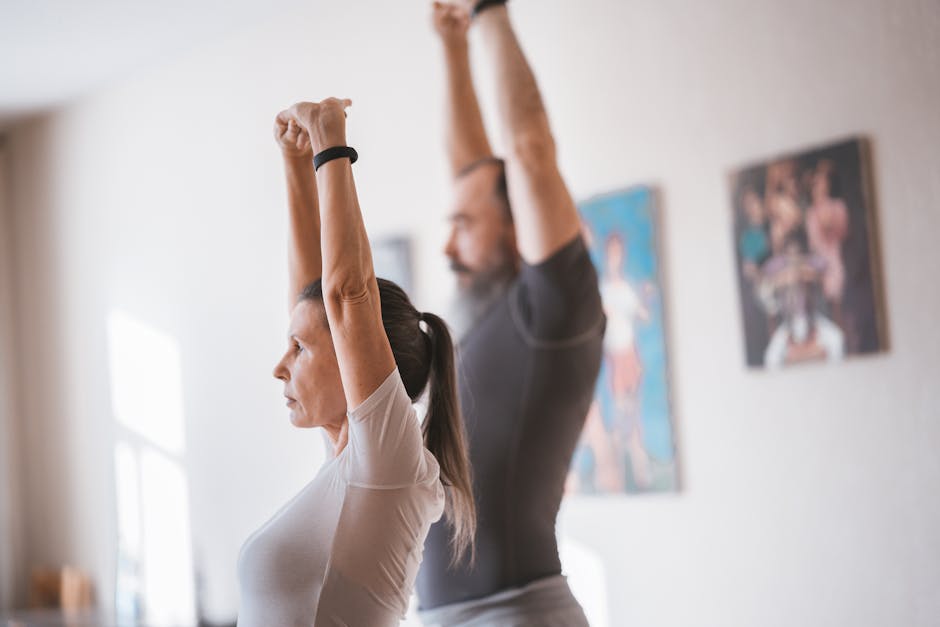
Remember that feeling? Waking up and for the first few steps, you feel like you've aged 30 years overnight. Your knees, your back, your shoulders — everything feels stiff and stuck.
Here’s a simple, 10-minute routine of morning stretches for joint stiffness you can do before your feet even hit the floor. This isn't about becoming a yogi overnight. It’s about gently waking up your body to help ease that perimenopausal joint stiffness and start your day feeling a little more human.
Step-by-Step: Your 10-Minute Morning Stretch Routine
I get it. The last thing you want when you’re exhausted is a complicated workout. This is the opposite of that. It’s gentle, it’s quiet, and it meets you right where you are — in bed.
Here’s why your joints ache most in the morning, in more detail.Morning stiffness is basically the sensation of tight, uncooperative joints when you first wake up, and it tends to get better with a little movement. That’s all we’re doing here. Just some simple, intentional gentle movement for stiffness to ease into the day.
- Full Body Reach (1 minute) — Before you even sit up, lie on your back and take a deep breath in. As you breathe, reach your arms up over your head and point your toes, trying to make your body as long as possible. Hold for a few seconds, then exhale and relax. Repeat this 3-4 times. It’s a simple way to send a signal to your muscles and joints that it’s time to wake up.
- Knee-to-Chest Hug (2 minutes) — Still on your back, gently pull one knee toward your chest, holding it with both hands. Don’t force it; just pull until you feel a comfortable stretch in your lower back and hip. Hold for 30 seconds, breathing steadily, then slowly release and switch to the other leg. Do each side twice. This is fantastic for that lower back ache so many of us feel first thing in the morning.
- Gentle Spinal Twist (2 minutes) — Lie on your back with your knees bent and feet flat on the bed. Keeping your shoulders flat against the mattress, let both knees fall slowly to one side. You can extend your arms out to a "T" shape for a deeper stretch across your chest. Hold for 30-45 seconds, then use your core muscles to bring your knees back to the center and repeat on the other side.
- Seated Forward Fold (2 minutes) — Sit up on the edge of your bed with your feet flat on the floor. Hinge at your hips and slowly let your upper body hang forward. Let your head and neck go heavy. You should feel a nice release in your spine and hamstrings. Just breathe here for a full minute, then slowly, vertebra by vertebra, roll back up to a seated position.
- Neck & Shoulder Release (3 minutes) — This is where so much of our tension lives. While sitting, gently drop your right ear toward your right shoulder. Don't pull or push. Just let gravity do the work for 30 seconds, then switch sides. After, roll your shoulders up toward your ears, hold for a second, and then drop them with a sigh. Repeat this 5-6 times. It feels surprisingly good.
How Can I Make This Stretching Routine a Long-Term Habit?
Look, the hardest part of any new routine is just making it stick. So don't aim for perfection. Aim for consistency. If you only have time for two of the stretches one morning, that's fine. It's better than zero.
More on daily habits in the Journal.Try linking it to something you already do without thinking. Maybe it's the very first thing you do when your alarm goes off, before you even check your phone. Or maybe it’s what you do while you wait for your coffee to brew. The goal is to make it so automatic you don't even have to decide to do it. And listen to your body. If something feels sharp or painful, back off. This is about kindness, not punishment.
Frequently Asked Questions
Why do my joints feel so stiff in the morning during perimenopause?
It’s incredibly common, and you're not imagining it. Fluctuating estrogen levels during perimenopause are a key reason many women start to experience new joint pain and muscle aches. Estrogen has a role in managing inflammation in the body, so when it starts to dip and spike, our joints can feel the effects.
Will these morning stretches balance my hormones or increase estrogen?
That’s a great question, and the honest answer is no. Research suggests the benefits aren't about directly changing your hormone levels. Instead, a consistent stretching practice may help improve things like sleep quality and overall menopausal symptoms by positively affecting your autonomic nervous system, which helps regulate your stress response.
How soon can I expect to feel a difference with this stretching routine?
This isn't an overnight fix. Think of it as a long-term investment in your wellness. Some women feel a bit more mobile after just a few days, but the real benefits for perimenopause joint ache relief come from consistency over several weeks. One study on middle-aged women found that a regular stretching program helped improve their symptoms, showing the power of sticking with it.
Sources
- Effects of stretching on menopausal and depressive symptoms in middle-aged women (2016)
- Effect of integrated yoga therapy on pain, morning stiffness and anxiety in osteoarthritis of the knee joint: A randomized control study (2012)
- 5 ways to ease perimenopause joint pain (2024)
- This 10-minute stretching routine can help loosen stiff joints without a single squat (2025)
- Why Are You So Stiff in the Morning and How to Fix It (undated)
- Stretch gloves: nocturnal use to ameliorate morning stiffness in arthritic hands (1971)
This statement has not been evaluated by the Food and Drug Administration. This product is not intended to diagnose, treat, cure, or prevent any disease.