
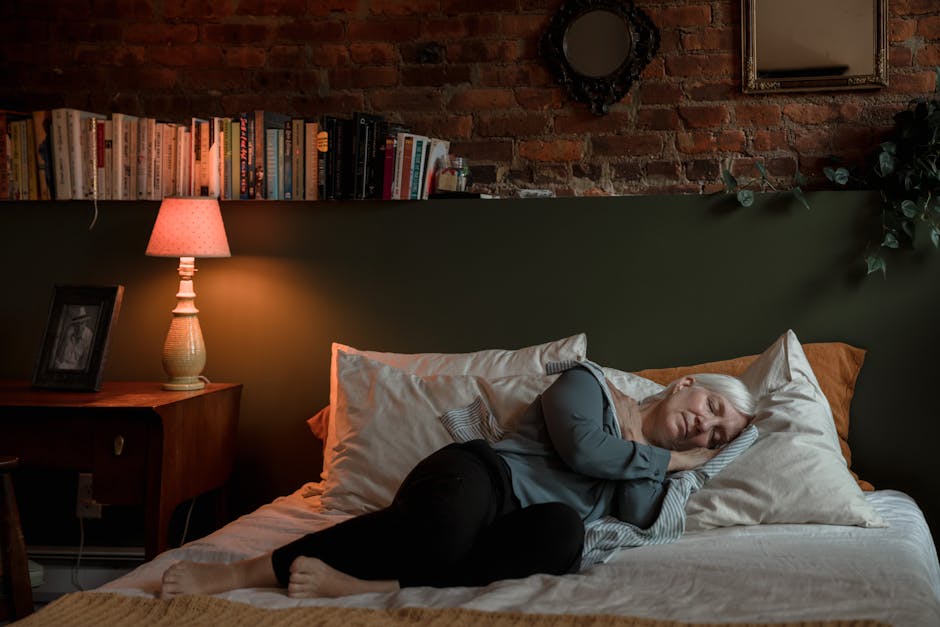
For years, I'd get my eight hours, religiously. But I'd wake up feeling like I’d been in a wrestling match all night — exhausted, head full of cotton, and drenched in sweat. I thought I was just broken.
If you feel exhausted after a full night's sleep, it’s likely because perimenopausal hormone shifts are disrupting your sleep architecture. This means your body isn't spending enough time in the deep, restorative sleep stages, even if you’re in bed for eight hours. Your sleep quantity is there, but the quality is gone.
Why Is "8 Hours" Not Restful Anymore?
You’re not imagining it. That bone-deep tired feeling is real, and it has a name: fragmented sleep. Think of your sleep as a building process with different stages, or what sleep science calls "sleep architecture." You have light sleep, deep sleep (also called slow-wave sleep), and REM sleep. You need to cycle through these stages smoothly to wake up feeling restored. Deep sleep is for physical repair, and REM sleep is for memory and emotional processing. Perimenopause comes in like a wrecking ball. Research shows that as our hormones fluctuate, we spend less time in those critical deep and REM stages. So you can be unconscious for hours, but your brain and body aren't getting the deep-clean they need. And honestly? That's exhausting.
What's Actually Waking Me Up So Often?
It's not always a dramatic, bolt-upright-in-bed kind of thing. Sometimes it’s just a restless tossing and turning. The most common sleep problem during this time isn't trouble falling asleep, but trouble staying asleep. There are a couple of key things going on here.
First, the obvious one: night sweats. Those sudden, intense waves of heat are caused by fluctuating estradiol levels, and they are a primary reason for waking up. More on what actually triggers night sweats. They physically jolt you out of whatever sleep stage you were in, shattering that delicate architecture. But there's a quieter culprit, too — progesterone. Progesterone has a calming, sleep-promoting sidekick. But as its levels decline in perimenopause, we lose that soothing effect. This can make you feel more anxious or just generally less settled at night, leading to more frequent, subtle awakenings you might not even fully remember. It's a one-two punch that leaves your sleep in pieces.
Is It Just Hormones, or Am I Going Crazy?
You are definitely not going crazy. But it's also true that it's not just about the hormones themselves. The connection is more complex. Those same hormonal shifts, particularly with estradiol, can also increase the risk for mood changes or depressive symptoms. And we know that feeling down, worried, or anxious is its own recipe for a terrible night's sleep. So you end up in this frustrating loop: the hormones disrupt your mood, your mood disrupts your sleep, and the lack of sleep makes your mood even worse. It’s a messy, interconnected web, and it's no wonder so many of us feel like we're barely holding it together. You’ll find more in the Glomend Journal. It’s a physiological storm, not a personal failing.
What This Means for You
First, take a deep breath. Knowing why this is happening is a huge first step. It’s not in your head, and it’s not your fault. You’re not failing at sleep — your body is just navigating a massive hormonal shift. The old rules of "just get 8 hours" don't apply in the same way right now. The goal shifts from chasing a certain number of hours to supporting the quality of the hours you do get. This understanding is your foundation. It allows you to stop blaming yourself for being tired and start asking a better question: "Okay, knowing this, how can I best support my body right now?" For comprehensive support during this transition, many women consider an approach that addresses both daytime balance and nighttime rest, such as The Complete Day & Night System.
Frequently Asked Questions
Does perimenopause permanently ruin my sleep architecture?
It doesn't have to be permanent, but it is a period of significant change. Think of it less as "ruined" and more as "under construction." Your body is adapting to a new hormonal reality. Many women find that with lifestyle support and targeted supplements like GloRest, they can improve their sleep quality again.
Is it the night sweats or the hormones themselves wrecking my deep sleep?
It’s really both. Night sweats are a very direct, obvious interruption that can pull you out of deep sleep. But the underlying hormonal shifts, like the decline in sleep-promoting progesterone, can disrupt your sleep cycles even on nights you don't have sweats. They work together to fragment your sleep.
If I'm in bed for 8 hours but wake up a lot, does it still "count"?
In terms of time, yes, but in terms of restoration, probably not. This is a classic symptom of non restorative sleep during menopause, where quality is more important than quantity. Constant awakenings — even small ones you don't fully remember — break up those essential deep and REM sleep cycles. That's precisely why you can feel so exhausted despite a "full" night in bed.
Sources
This statement has not been evaluated by the Food and Drug Administration. This product is not intended to diagnose, treat, cure, or prevent any disease.