
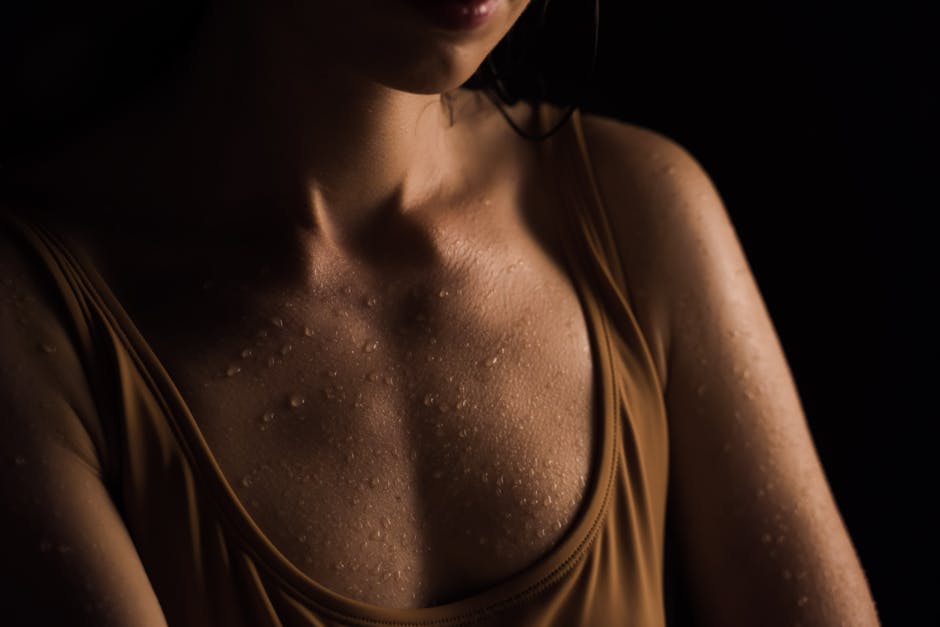
It’s 3 a.m. and you're throwing off the covers. Again. Not just warm, but drenched, with your heart pounding like you just ran a race in your sleep. It’s a whole-body, five-alarm fire that no one else can feel.
Those intense night sweats aren't just in your head. The underlying perimenopause night sweats causes are complex, but it starts with your fluctuating estrogen levels confusing a part of your brain called the hypothalamus—your body's thermostat. It overreacts to tiny temperature changes, triggering a sudden, intense heatwave followed by a flood of sweat to cool you down.
So, what’s happening inside my brain’s control center?
Think of your hypothalamus as the thermostat for your house. For years, it's been set to a comfortable 72 degrees. But as the relationship between estrogen and body temperature is disrupted by unpredictable drops and spikes during perimenopause, it’s like someone is messing with the wiring. The center for your hypothalamus thermoregulation becomes incredibly sensitive. Suddenly, it thinks a minor change in room temperature is a sign the house is on fire. In response, it triggers an emergency cool-down: your blood vessels dilate, your skin flushes, and your sweat glands go into overdrive. And this intensity you feel? It’s real. It's not just a subjective feeling—researchers measure both the frequency and the severity of these episodes in clinical trials to see what actually helps. It's a full-on neuroendocrine event, not just "feeling a little hot."
Does this chaos in my brain affect more than just my sleep?
Yes. And honestly, this is the part I wish someone had explained to me years ago. It’s not just about being tired from waking up all night. There’s a deeper connection to brain health. Some research has found a link between women who experience more frequent night sweats and the presence of something called white matter hyperintensities in the brain. These are tiny spots often seen on MRIs, and they were noted particularly in the frontal lobe—the very part of your brain responsible for focus, planning, and problem-solving. Sound familiar? It’s a potential clue into why the brain fog can feel so debilitating. Now, this doesn't mean one causes the other. It’s an association, not a direct cause-and-effect. But it does validate that what you're feeling is physiological. It’s not just stress or a lack of sleep.
More on what actually causes perimenopause brain fog.What This Means for You
First, let’s take a breath. Knowing the "why" isn't about adding another thing to your worry list. It's about validation. What you are experiencing is real, it's rooted in hormonal changes and brain chemistry, and you are not alone in this. The exhaustion is real. The intensity is real. The impact on your thinking is real.
This knowledge gives you a starting point. While you can't just flip a switch on your hypothalamus, you can start to notice the things that might be making it even more sensitive. Is it that second glass of wine? The spicy dinner? A stressful day at work? Paying attention to these external triggers can be an incredibly helpful first step. This isn't about perfection or a restrictive lifestyle. It’s about gentle awareness and finding small adjustments that can support better sleep health and overall wellness through this transition. Because a little more calm and a few more hours of uninterrupted sleep can make all the difference.
There’s more on how to set up your bedroom for night sweats here.Frequently Asked Questions
Why do my perimenopause night sweats feel so much more intense than just being hot?
It's because they aren't just about being hot. A perimenopausal night sweat is your brain's overreaction to fluctuating hormones. Your internal thermostat, the hypothalamus, mistakenly thinks your body is overheating and triggers an aggressive, full-body cool-down—that's the sudden, intense heat and profuse sweating you feel.
Is there a direct link between perimenopause night sweats and my brain fog?
While poor sleep from night sweats definitely contributes to brain fog, some research suggests a deeper connection. Studies have found an association between more frequent hot flashes and night sweats and certain changes in the brain's white matter, specifically in areas tied to executive function. It's a link, not a proven cause, but it shows these symptoms may be more connected than we thought.
If I cut out coffee and wine, will my night sweats stop completely?
It might help, but it's probably not a magic bullet. Triggers like alcohol, caffeine, and spicy foods can make night sweats more frequent or intense for many women, so reducing them is a great strategy. But the root cause is hormonal fluctuation, so while lifestyle changes can offer significant support, they may not eliminate the sweats entirely.
Sources
- Are More Hot Flashes, Night Sweats During Menopause Linked to ... (Undated)
- Effect of Combined Herbal Capsule Menohelp on Hot Flashes and Night Sweats in Postmenopausal Women: A Single-Blind Randomized Controlled Trial - PMC (2020)
- Effect of omega-3 supplements on vasomotor symptoms in ... (2018)
- Effectiveness of Multisymptom Support for Better Relief and Alleviation of Common Effects in Perimenopause (EMBRACE PERIMENOPAUSE). (2025)
- Night Sweats: Menopause, Other Causes & Treatment (2026)
- Night Sweats in Women: Causes, Remedies, and Tips (2025)
- Office of Dietary Supplements - Black Cohosh (Recent)
- Perimenopause Night Sweats: Causes, Treatment & What They Feel Like (2025)
- Sleep and Brain Function at Menopause - PMC - NIH (2025)
This statement has not been evaluated by the Food and Drug Administration. This product is not intended to diagnose, treat, cure, or prevent any disease.