
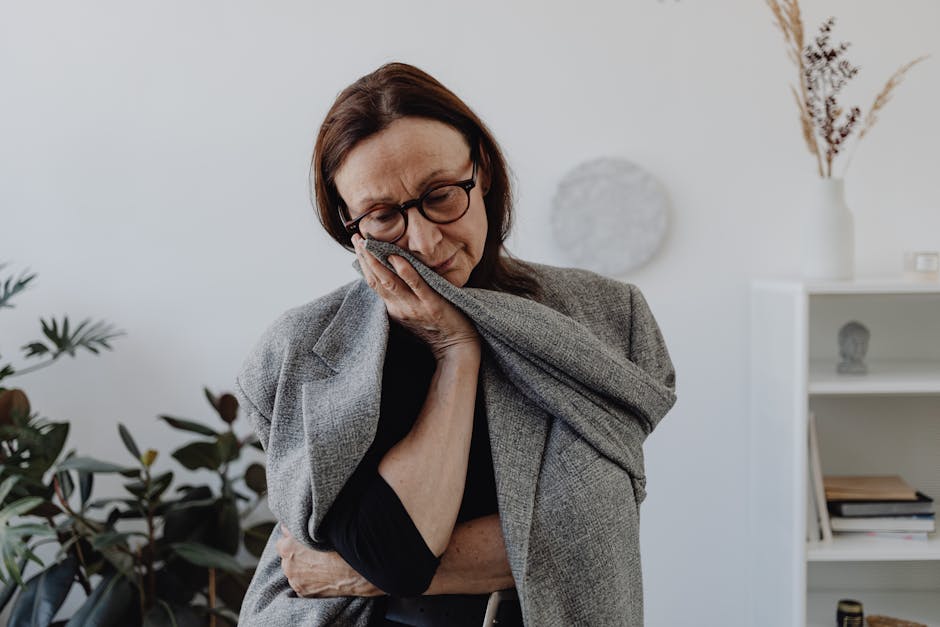
I remember looking in the mirror one morning and having this bizarre, sinking feeling: Who is that? It wasn't about wrinkles or gray hairs. The person looking back just didn't feel like me anymore.
If you're grappling with a sense of perimenopause loss of self, you're not imagining it. This feeling is a recognized hormonal experience. Fluctuating estrogen and progesterone levels can disrupt your mood, energy, and even your ability to feel pleasure, leaving you feeling disconnected from the person you’ve always known.
Is It Just Me, or Is This a Real Thing?
It's very, very real. The phrase “not feeling like myself” is one of the most common things women report during this time, and it’s clinically linked to a whole cluster of symptoms like anxiety, fatigue, brain fog, and a mood that can turn on a dime. Worth reading next: how falling progesterone slows your thinking. For years, women were told this was just stress or a normal part of aging—something to just get through. And honestly? That's exhausting.
But we know better now. That feeling of being completely upended has a clear physiological basis tied to hormones and identity change. It’s a hormonal imbalance, not a personal failing. The unpredictable surges and dips in estrogen and progesterone are directly tied to both physical and emotional symptoms, including the mood shifts and sleep problems that can make you feel like a stranger in your own body. So no, you’re not making it up. You're not being dramatic. You're having a completely valid biological response to a massive internal shift.
Why Does Everything Feel... Flat?
Remember the things that used to light you up? A great book, a long walk with a friend, that specific song you’d turn up in the car. What happens when the joy just… fizzles out? There’s a word for this: anhedonia. It’s a reduced ability to feel pleasure from things you used to love, and it’s a quiet, sneaky part of perimenopause for many of us. More like this in the Glomend Journal. It’s not sadness, exactly. It's more of a flatline. An emotional numbness.
This feeling of flatness can be a huge contributor to that perimenopause loss of self. If your passions and joys helped define who you are, it’s terrifying when they suddenly go quiet. You’re left wondering what’s even left. While researchers are still connecting all the dots, the leading idea is that our hormones have a direct line to our brain chemistry. Estrogen, in particular, helps regulate neurotransmitters like serotonin and dopamine—the very chemicals responsible for our mood, motivation, and sense of reward. When estrogen goes on its perimenopausal rollercoaster, it can disrupt these systems, contributing to that feeling of detachment.
So, What Can I Actually Do About It?
The first and most important step is simply knowing that this isn't in your head. Giving a name to it—understanding that it's your hormones, not your personality, that's gone haywire—is a huge relief. It moves the problem from "what's wrong with me?" to "okay, what can I do to support my body right now?" You’re not broken, you’re just in transition. And you’re not powerless.
This is where we can reclaim a little bit of control. We can start by looking at what we’re putting into our bodies. Research increasingly shows that nutrition and dietary choices can be an important piece of the puzzle for managing menopausal symptoms, which absolutely includes mood-related changes. This isn't a new idea—women have turned to botanical and dietary supplements for support during this life stage for a long time. Focusing on a nutrient-dense diet isn't about a quick fix, but about providing your body with the fundamental building blocks it needs to navigate this hormonal turbulence a little more smoothly. It’s a way to feel proactive when so much else feels out of your hands.
What This Means for You
Feeling like you've lost yourself is disorienting and, frankly, scary. But it's not a permanent state. It’s a symptom, just like night sweats or brain fog. The most powerful thing you can do is to stop blaming yourself for what feels like perimenopause personality changes. This isn't a character flaw. It's biology.
Start with compassion. Your body is doing something incredibly complex, and it needs support, not criticism. Get curious about what helps you feel even a little bit more grounded. Maybe it's a walk outside, maybe it's talking to a friend who gets it, or maybe it's taking a hard look at your nutrition to see where you can offer your body more support. The old you isn't gone—she's just navigating a massive hormonal storm. Your job is to be her anchor.
Frequently Asked Questions
Why does perimenopause make me feel so detached from myself?
That feeling of detachment often comes from a combination of hormonal shifts. Fluctuating estrogen can impact mood-regulating brain chemicals, while symptoms like fatigue and brain fog can create a sense of distance between your mind and body, making you feel like a passenger rather than the driver.
Can brain fog in perimenopause feel like losing my personality?
Yes, absolutely. When you can't find the right word, forget why you walked into a room, or struggle to focus, it can feel like you're losing your sharpness and wit—key parts of your personality. This cognitive fog is a real physiological symptom of hormonal change, not a sign that you're losing who you are.
Is it normal for things I used to love to feel boring during perimenopause?
It's incredibly common. This is sometimes called anhedonia, and it's the reduced ability to feel pleasure. When your hormonal fluctuations affect your brain's reward centers, activities that once brought you joy can feel flat or like a chore, which can be deeply unsettling.
Sources
- “Not feeling like myself” in perimenopause - PMC - NIH (2024)
- Mental health and menopause: There are connections and solutions (2024)
- Where's My Joy? Understanding Anhedonia During Menopause (undated)
- Botanical and Dietary Supplements for Menopausal Symptoms: A Review of the Plant-Based Medical Literature (2005)
- Botanical and dietary supplements for menopausal symptoms: a review of the evidence (2005)
- The Importance of Nutrition in Menopause and Perimenopause—A Review (2023)
- Perimenopause may offer a “window of opportunity” for heart disease prevention in women (2024)
- Losing Hair During Perimenopause? Causes, Changes, and What Helps (undated)
- There Was No Playbook for Perimenopause—So I’m Helping Write One (2023)
This statement has not been evaluated by the Food and Drug Administration. This product is not intended to diagnose, treat, cure, or prevent any disease.