
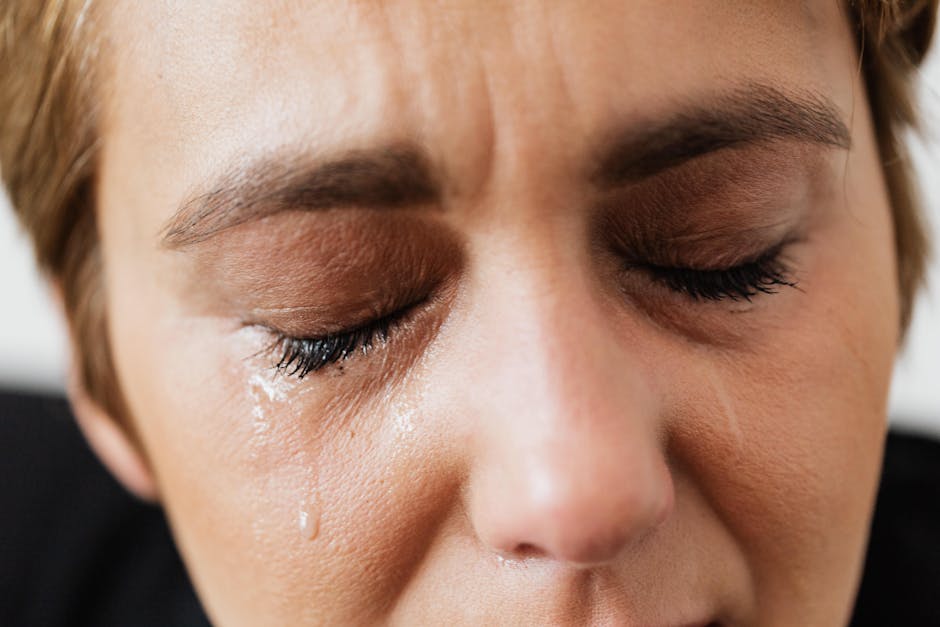
The other day, I burst into tears because I couldn't find my keys. Not quiet, gentle tears. I'm talking about a full-on, shoulder-shaking sob session, right there in the entryway. The keys were in my other jacket pocket, of course.
If you suddenly feel weepy over things that never used to bother you, it's not a personal failing. It’s a physiological response. During perimenopause, fluctuating estrogen levels disrupt your brain's mood-regulating neurotransmitters, particularly serotonin, which can seriously diminish your emotional resilience and trigger these sudden perimenopause crying spells.
So, Is It Just Hormones, or Am I Losing My Mind?
I get it. It's easy to feel like you're losing control. One minute you’re fine, the next you’re welling up at a commercial for dog food. You're not losing your mind, and you are not “too emotional.” What’s happening is a profound biological shift that directly affects your brain chemistry.
Think of estrogen as a master regulator in your brain. For years, it helped manage your stress response system and keep feel-good chemicals like serotonin flowing steadily. Serotonin is one of the key neurotransmitters that helps you feel calm, steady, and capable. But as estrogen starts to fluctuate wildly during perimenopause, its influence on these pathways becomes erratic. This can disrupt the delicate balance of serotonin, dopamine, and GABA — all crucial for maintaining emotional serenity. This clear estrogen and serotonin link is why your brain's ability to handle everyday stress is just... lower. It's like your internal shock absorbers have worn thin.
Why Does It Feel Like My Emotional ‘Skin’ Is Thinner?
Because, in a way, it is. That feeling of being emotionally raw or having a shorter fuse is a hallmark of this transition, a state sometimes referred to as emotional lability during perimenopause. For years, I just felt... fragile. The emotional buffer I'd always counted on was gone. Researchers see this clearly in the data — sudden crying spells are a clinically recognized psychological symptom of perimenopause, tied directly to a dip in overall well-being.
And honestly? It’s exhausting. You're not just dealing with the tears themselves, but also the confusion and frustration that comes with them. This period of heightened emotionality is most common during the perimenopausal phase, when hormonal changes are at their most chaotic. The good news is that for many women, this tends to level out as their bodies adjust to a new, stable hormonal reality post-menopause. But while you're in it, it feels endless. More on where perimenopause rage comes from. Studies even show a general decline in mental wellness scores for women during perimenopause, confirming that what you're feeling is part of a very real, very widespread pattern. You aren’t imagining it, and you are definitely not alone.
What This Means for You
First, give yourself some grace. You are navigating a major physiological change that is rewiring your brain's emotional hardware in real-time. This isn't a character flaw. It's biology.
Knowing the "why" can be incredibly powerful. It helps you separate who you are from what you're experiencing. When a wave of emotion hits you out of nowhere, you can take a breath and remind yourself, "This is a hormonal surge. This is a neurotransmitter dip. It will pass." It doesn't stop the tears, not always, but it can stop the spiral of self-blame that often follows.
This is a time to be fiercely protective of your peace. It might mean saying no more often, avoiding known stressors, We write more about sleep here. prioritizing sleep like it's your job, and being gentle with yourself when you have a bad day. The old "push through it" mentality just doesn't work here. Your body is asking for something different. Learning to listen is the first step.
Frequently Asked Questions
Do these perimenopause crying spells ever go away?
For many women, yes. The crying spells and heightened emotional sensitivity are most common during perimenopause when hormones are fluctuating dramatically. As you move into post-menopause and your hormones settle into their new normal, these symptoms often lessen or disappear entirely.
Can stress make these crying spells worse?
Absolutely. Estrogen plays a big part in managing the brain's stress response system. When estrogen levels are erratic during perimenopause, your natural ability to cope with stress is lower, making you much more vulnerable to feeling overwhelmed and tearful in stressful situations.
Is it normal to feel totally fine one minute and then tearful the next?
Yes, it's very common. Think of it like this: the hormonal shifts are causing your mood-regulating neurotransmitters to go up and down unpredictably. That's why you can feel perfectly stable one moment and then suddenly overcome with emotion for no apparent reason. It’s the biochemical rollercoaster of perimenopause.
Sources
- You are not “too emotional.” This could be perimenopause. (2026)
- Estrogen, Stress, and Depression: Cognitive and Biological Interactions (2022)
- Dealing with Perimenopause Rage? How to Balance Your Mood & Next ... (2026)
- Botanical and dietary supplements for menopausal symptoms (2005)
- Botanical and dietary supplements for mood and anxiety in ... (2006)
- Positive well-being during the menopausal transition: a systematic review (2015)
- Menopause Crying: How to Manage Your Tears (2025)
- Crying in Menopause: Is It Normal to Be More Emotional? (2025)
- Anxiety during Perimenopause: A Narrative Qualitative Study of the ... (2025)
"This statement has not been evaluated by the Food and Drug Administration. This product is not intended to diagnose, treat, cure, or prevent any disease"