
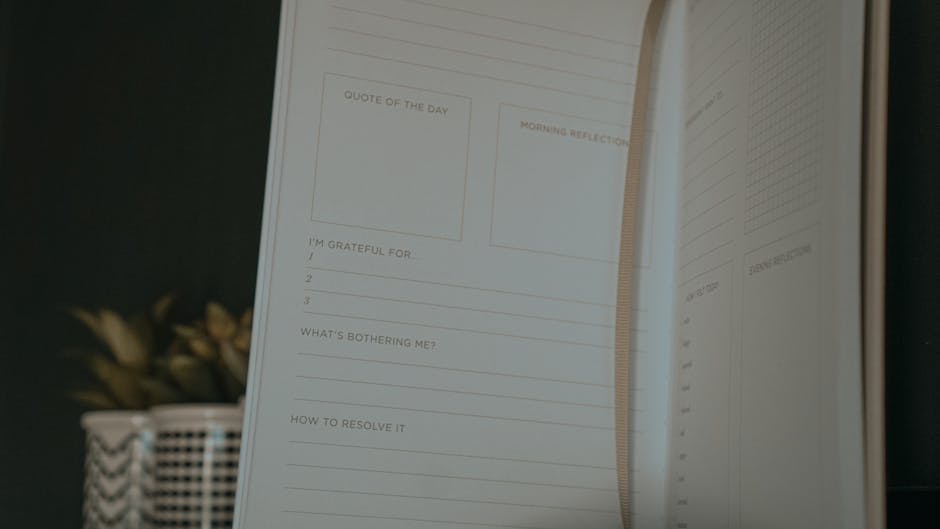
Some days the emotional whiplash is real. You feel fine one minute, and the next you're fighting back tears over a car commercial or snapping at your partner for breathing too loud. It’s disorienting and, frankly, exhausting.
This isn't another thing to add to your overwhelming to-do list. This is a practical, five-minute plan to start using a gratitude journal for mood swings. It’s a small, quiet practice that can become a steadying anchor when Worth reading next: how an unhappy gut worsens mood swings.perimenopausal mood swings make you feel like you're lost at sea.
Step-by-Step: Your 5-Minute Gratitude Blueprint
- Grab Any Notebook and a Pen. — Seriously. Don't go out and buy a fancy, gold-leafed journal unless you really want to. The goal is to make this easy. A half-used legal pad or the notes app on your phone works just as well. The point is to just start.
- Find Your Five Minutes. — First thing with your coffee? Or right before you turn out the light? There's no magic hour. Just pick a time you know you can protect most days, perhaps as part of a calming evening ritual alongside a supplement like GloSerene. Consistency is what may help support the building of new neural pathways over time, which is linked to a more resilient mindset. Set a timer so it feels manageable, not like another chore.
- Write Down Three Specific Things. — This is the most important part. "I'm grateful for my kids" is nice, but it's too general to really sink in. To get the most out of these positive journaling prompts, get specific. "I'm grateful for the stupid joke my son told at dinner that made me laugh." "I'm grateful for the five minutes of silence in my car after dropping everyone off." It's the feeling of gratitude that seems to be the active ingredient here, and specificity is how you get there.
- Acknowledge One Thing About You. — This one can be tough, especially on hard days. But it’s an exercise in self-compassion, something that research suggests gratitude practices can help promote in women. It doesn't have to be monumental. "I'm grateful I had the patience to deal with that difficult email." Or, "I'm grateful I chose to go for a walk instead of staying on the couch." Acknowledge your own small wins.
How Can You Make Gratitude Journaling a Long-Term Habit?
Let's be honest. There will be days you stare at the blank page and feel anything but grateful. Days when you’re just tired, irritable, and over it. That’s okay. That's part of this whole phase of life. On those days, just write the basics. "I am grateful for this cup of tea." "I am grateful for my warm bed." Don’t force it. The goal isn’t toxic positivity; it’s just gently shifting your focus, even for a moment.
And it's important to have realistic expectations. While many studies show a consistent link between gratitude and improved psychological well-being, the research on its effects for More on mood and brain fog in the Journal.anxiety and depression is more mixed, with some studies finding the benefits to be modest. Think of this as one helpful tool for perimenopause anxiety relief in your wellness toolbox, not a magic fix. It’s a quiet, steady practice that can support a greater sense of calm over time.
Frequently Asked Questions
How can a gratitude journal specifically help with perimenopausal mood swings?
During perimenopause, fluctuating hormones can make you feel less resilient to stress. A gratitude practice can't change your hormones, but it can help support emotional regulation by training your brain to notice positive things, which may foster a greater sense of well-being and self-compassion on difficult days.
What if I really don't feel grateful? Will writing things down still work?
Yes. The act itself is what matters, especially on the hard days. You don't have to feel a huge rush of happiness. Just the simple act of searching for and writing down something small—a comfortable sweater, a good cup of coffee—is the practice. Some days it's just about going through the motions, and that's perfectly fine.
How long will it take to notice a difference from gratitude journaling?
There's no set timeline, and it's different for everyone. Some women report feeling a subtle shift in their perspective within a couple of weeks, while for others it might be more gradual. The key is consistency, not intensity. The benefit is in the slow, steady accumulation of these small moments of reflection.
Sources
- Science Behind Gratitude Journals and Brain Rewiring | Psychowellness center (2025)
- A systematic review of gratitude interventions: Effects on physical health and health behaviors - ScienceDirect (2020)
- Can promoting compassion and gratitude through a four-week online training program improve women's mental health? A randomized controlled trial - PMC (2024)
- Gratitude as Mood Mediates the Effects of a 6-Weeks Gratitude Intervention on Mental Well-Being: Post hoc Analysis of a Randomized Controlled Trial - PMC (2022)
- The Neuroscience of Gratitude & Its Effects on the Brain (2025)
This statement has not been evaluated by the Food and Drug Administration. This product is not intended to diagnose, treat, cure, or prevent any disease.