
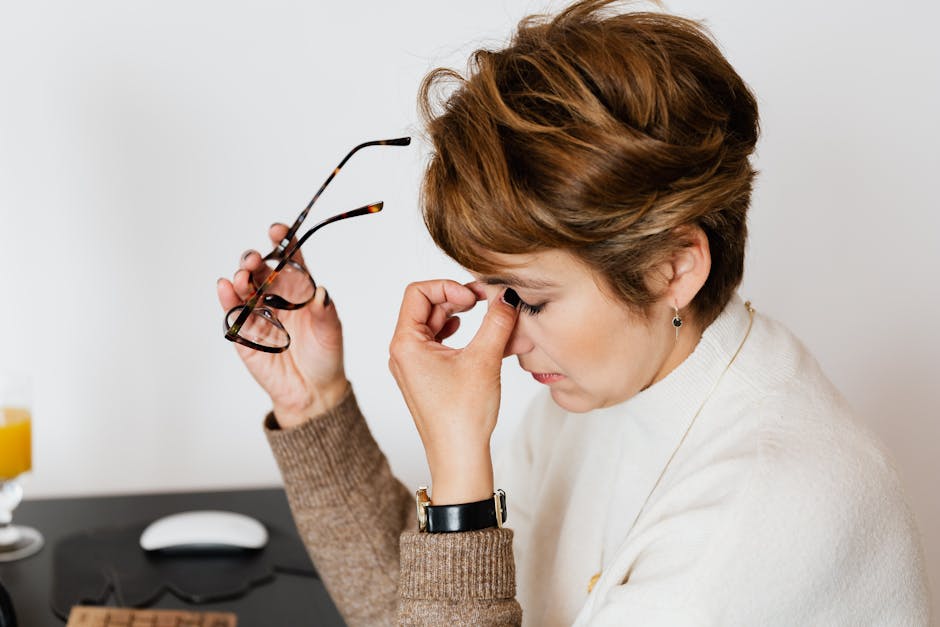
For years, I felt like I was running a marathon every single day, only to collapse into bed and stare at the ceiling, my mind racing. I was exhausted, but I couldn't rest. Sound familiar?
If you feel utterly burned out and depleted, please know this: it’s not a personal failing. The hormonal fluctuations of perimenopause can place a heavy burden on your body’s central stress response system, leading to what is known as HPA axis dysfunction perimenopause. It's a physiological event, not a character flaw.
What's the link between my hormones and feeling so stressed?
Think of your body as having two distinct, but connected, communication networks. One is the Hypothalamic-Pituitary-Adrenal (HPA) axis — this is your stress response command center. It manages your reaction to everything from a tight deadline to a traffic jam by releasing cortisol. Then there's the Hypothalamic-Pituitary-Gonadal (HPG) axis, which runs your reproductive system, managing hormones like estrogen and progesterone.
For most of our lives, these two systems work in a delicate dance. But here’s the thing no one tells you: they are biologically wired together. They share pathways and constantly communicate. So, when one system is under pressure, the other one feels it. More on hormones and your body in the Journal. It’s not your imagination that hormonal shifts and stress feel like they’re part of the same tangled story. Because they are.
Why does perimenopause make everything feel so much harder?
Perimenopause turns that delicate dance into a mosh pit. The predictable rhythm of your hormones is gone. Instead, you get chaotic spikes and dips in key hormones like estradiol (a form of estrogen) and progesterone. These aren't just mood-swing culprits; they directly influence how your HPA axis behaves.
Suddenly, your stress command center is getting confusing signals. It can lead to dysregulated cortisol patterns — maybe too high when you want to sleep, or too low when you need to focus. This kind of cortisol perimenopause burnout is deeply exhausting. And honestly? That's exhausting. To make things more complicated, the aging process itself contributes to changes in HPA axis function, which can impact your metabolism and overall endocrine balance. You're navigating a biological perfect storm. This disruption can even affect melatonin, the hormone that manages your sleep-wake cycles, which helps explain that crushing daytime fatigue.
Is this burnout just in my head?
No. It’s so easy to blame ourselves, to think we should be able to handle it all, to just "push through." But what you're feeling isn't just being tired from a busy week. This is a deep, systemic exhaustion that a weekend of sleep won't resolve. That feeling of being drained, depleted, and completely out of gas has a name. Burnout.
From a functional medicine perspective, burnout isn't seen as a psychological problem, but as a physical one. It’s a signal from your body that your systems — especially your HPA axis — are overwhelmed and out of balance. It’s your body’s check-engine light. We write more about mood and brain fog here. It’s a physical state of being, not a state of mind. And listening to it is the first step toward feeling better.
What This Means for You
Reading this isn't meant to add "HPA axis dysfunction" to your list of worries. It’s meant to take something *off* your plate: the self-blame. The exhaustion you feel is real. The brain fog is real. The feeling of being completely overwhelmed has a physiological basis.
You’re not failing. Your body is working incredibly hard to navigate a massive transition. And just knowing that — truly understanding it — can be a huge relief. It gives you permission to stop pushing through and start listening. It’s the first, most important step toward figuring out how to support your body with a holistic strategy, like The Complete Day & Night System, instead of fighting against it.
Frequently Asked Questions
How can I tell if my burnout is from HPA axis issues or just normal perimenopause stress?
It’s often impossible to fully separate them because they are so interconnected. However, a key difference can be the depth and persistence. If you have a profound exhaustion that rest doesn't seem to touch, feel "wired but tired" at night, and experience low resilience to even minor stressors, it can suggest your HPA axis is struggling to adapt to the hormonal shifts.
I’ve heard the term ‘adrenal fatigue.’ Is that the same as HPA axis dysfunction?
That's a great question. "Adrenal fatigue" is a popular, non-medical term used to describe a collection of symptoms like exhaustion and burnout. However, the scientifically accepted term is HPA axis dysfunction. This is more accurate because the issue isn’t usually with the adrenal glands themselves, but with the communication signals between your brain and your adrenals.
Does managing my stress actually help my perimenopause symptoms?
While it won’t stop the hormonal changes from happening, supporting your body’s stress response can make a real difference. Because the stress system (HPA axis) and the reproductive system (HPG axis) are so linked, intentionally calming one can help provide stability for the other. For many, this includes lifestyle changes and exploring adrenal support for women. It's like turning down the static so you can hear the music more clearly.
Sources
- Extreme exhaustion and burnout: How it happens and what to do ... (2024)
- When fatigue leaves you drained, depleted, and dumbfounded (2023)
- A Functional Medicine Doctor On Why Burnout Is A Body Problem (Not Just A Mind Problem) (2023)
- Steroid Hormone Secretion Over the Course of the Perimenopause Through the Final Menstrual Period (2021)
- Dysfunction of the hypothalamic-pituitary adrenal axis and its age-related morbidities: a narrative review (2023)
- Ellen Kamhi, phd, rn: Herbal Support for the HPA Axis (2017)
- The role of the hypothalamic-pituitary-adrenal axis in the pathophysiology of perimenopausal depression (2023)
- Estrogen Variability, HPA Axis and Affective Symptoms (2021)
- Anxiety during Perimenopause: A Narrative Qualitative Study of the Lived Experience of Women (2023)
This statement has not been evaluated by the Food and Drug Administration. This product is not intended to diagnose, treat, cure, or prevent any disease.